

Key Takeaways:
- Painting costs £500-£3,500 upfront but needs redoing every 5-10 years, often costing more than replacement over 20 years.
- A new aluminium shop front (from £2,625) lasts 20-25+ years with virtually zero maintenance.
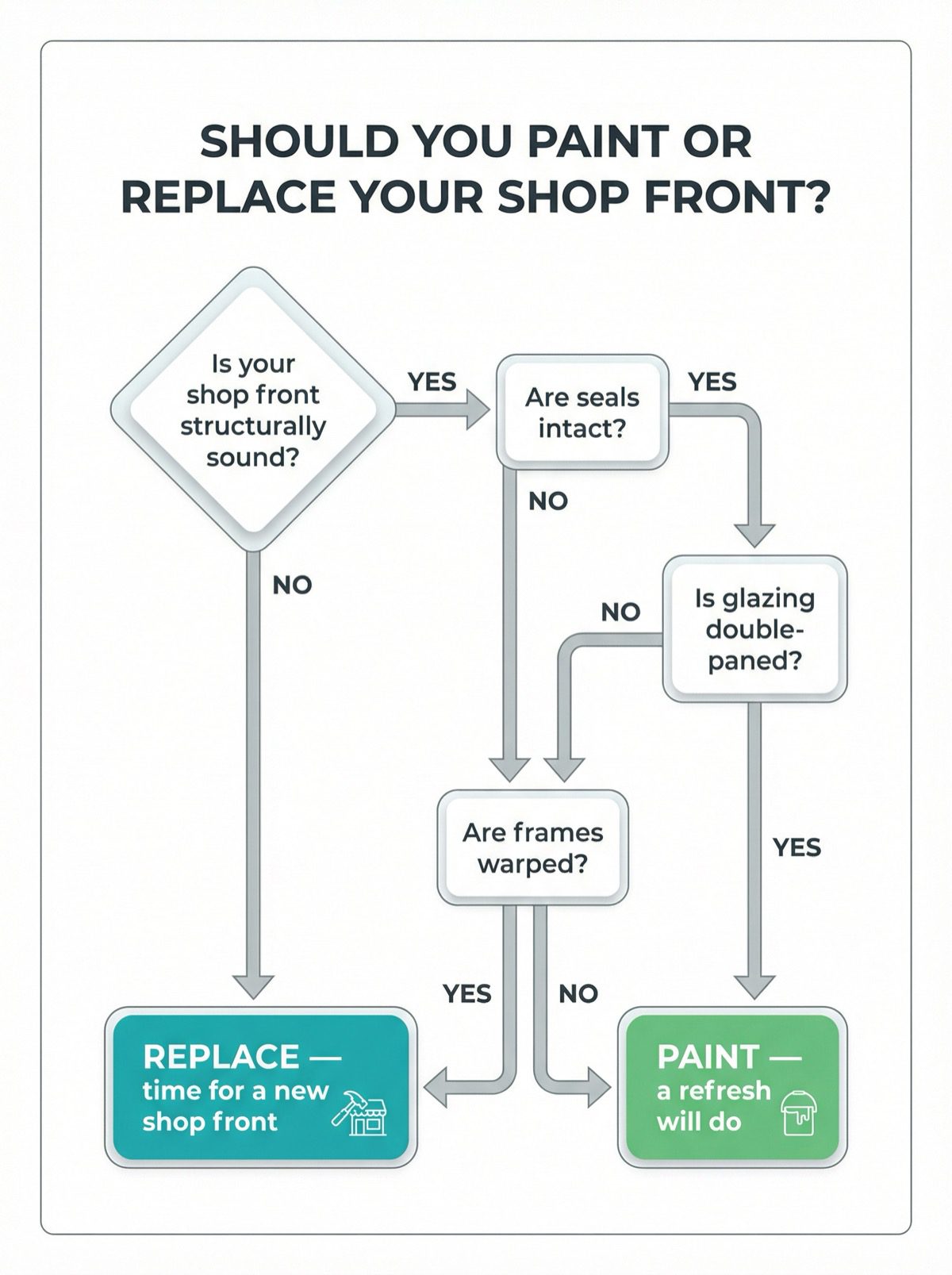
- Painting only makes sense if your frames are structurally sound, seals are intact and glazing is modern.
- Condensation between panes, draughty frames, warping or rust are signs painting will not fix the real problem.
- Powder-coated aluminium eliminates future painting entirely — available in any RAL colour from day one.
Your shop front looks tired. The paint is flaking along the frame edges, the colour has faded from three years of British weather, and a customer mentioned last week that the place “looked a bit run-down.” You know something needs to change — but should you call a painter or start pricing up a full replacement?
It is a question we hear constantly. And the honest answer is: it depends. As shop front installers, we could tell you that replacement is always the answer — but that would not be true. Sometimes a fresh coat of paint is exactly what your premises need. Other times, painting is throwing good money after bad.
This guide breaks down the real costs, material considerations and warning signs that tell you which route to take. No sales pitch — just practical advice from people who see shop fronts in every state of repair, every week.
When Painting Your Shop Front Makes Sense
Let us be upfront: painting or spraying your shop front is a perfectly valid option in plenty of situations. If any of the following apply to you, a professional respray could be the smartest move right now.
Your Shop Front Is Structurally Sound
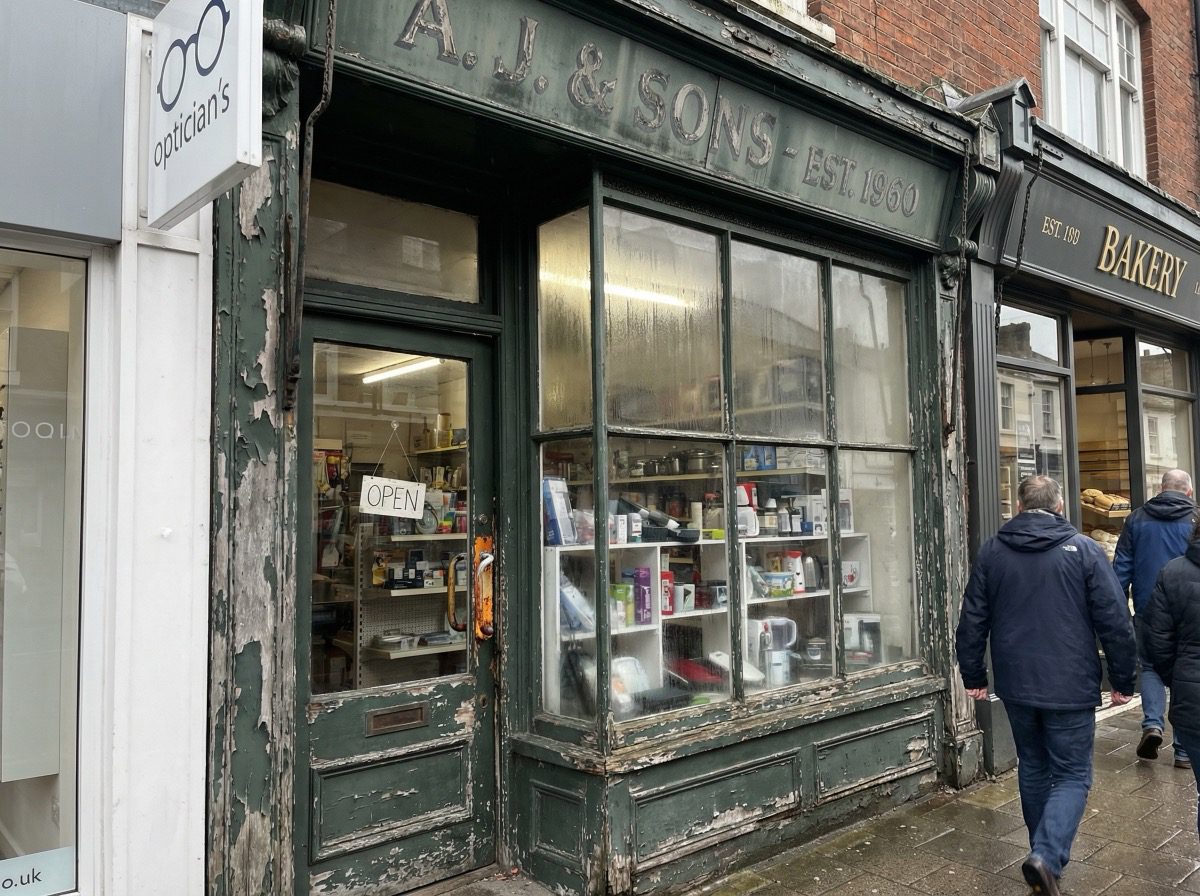
This is the big one. If your frames are solid, your seals are holding, your glazing is double-glazed and draught-free, and the only issue is cosmetic — paint away. A structurally sound shop front with faded or chipped paintwork is a prime candidate for spraying. You are refreshing the surface, not papering over deeper problems.
You Are on a Tight Budget
Cash flow matters, particularly for independent retailers and small businesses — especially if you are still working through the costs of opening a shop. Professional shop front spraying costs between £500 and £3,500, while a full replacement starts at around £2,500 and runs up to £7,350 or more depending on size and materials. If the budget genuinely is not there for replacement and your shop front is in reasonable condition, a quality respray buys you another 5-10 years.
You Are Rebranding or Changing Colours
Bought an existing business? Refreshing your brand identity? If the shop front itself is in good nick, changing the colour through professional spraying is fast, affordable and highly effective. Most spray jobs take just 1-2 days and can be done outside business hours, so there is minimal disruption.
Your Lease Is Short-Term
If you are renting and your lease has two or three years left, investing £5,000+ in a new shop front rarely makes financial sense — especially if the landlord will not contribute. A professional repaint keeps things presentable without overcapitalising on a premises you may not occupy long-term.
How Much Does It Cost to Paint a Shop Front?
Painting costs vary widely depending on whether you go DIY or hire professionals, and whether they brush-paint or spray.
DIY Painting Costs
DIY materials run between £100 and £300 — covering paint, primer, brushes, masking and sandpaper. Bear in mind that surface preparation takes longer than the painting itself. A poor prep job means the paint fails within 2-3 years rather than lasting 5-7.
Professional Shop Front Spraying Costs
Professional spraying delivers a far superior finish to brush painting. Expect to pay:
- Small shop front (single unit): £800-£2,000
- Medium retail unit (double frontage): £2,000-£3,500
- Individual windows: approximately £150 per window
- Door and frame: approximately £230
Most reputable spray companies offer a 5-10 year guarantee on their work. The finish is closer to a factory coating than anything you will achieve with a brush.
How Long Does Shop Front Paint Last?
A professional spray job lasts 5-15 years, with 8-10 years being a realistic average across most of England. Coastal areas and regions with heavy rainfall see faster degradation. DIY brush painting typically lasts 3-5 years.
Every repaint cycle means another round of costs, disruption and weathering risk. Those repeat costs add up — which is why the 20-year comparison later in this article is worth studying closely.
How to Get the Best Results from Shop Front Painting
If painting is the right call for your situation, preparation is everything. The number one cause of premature paint failure is poor surface prep — not poor paint.
Clean the surface thoroughly with sugar soap or a commercial degreaser. Sand down any flaking paint to a stable base, fill cracks with exterior-grade filler, and apply the correct primer for your substrate. Metal frames need a rust-inhibiting primer. Timber needs a microporous exterior paint. UPVC needs a specialist flexible formulation that bonds to plastic.
Always opt for professional spraying over brush painting if your budget allows. The finish is smoother, more even and lasts significantly longer. And do not cut corners on paint quality — premium exterior paints from manufacturers like Dulux Weathershield or Johnstone’s Trade cost more per tin but add years to the lifespan of the finish.
7 Signs Your Shop Front Needs Replacing, Not Painting
Here is where honesty matters. Painting a shop front that has underlying structural or performance issues is like polishing a car with a blown engine. It might look better for a few months, but you have not fixed the actual problem — and you have spent money that could have gone toward a proper solution.
If any of the following apply, painting is not the answer.
1. Structural Damage or Warping
Frames that are visibly bowed, warped or pulling away from the building cannot be fixed with paint. Timber swells and warps from moisture ingress. Old steel bends under its own corroded weight. UPVC distorts from years of thermal cycling. Once the frame geometry is compromised, it will only worsen.
2. Failed Seals and Draughty Frames
Can you feel a draught through closed windows and doors? Your seals have failed. This is not a painting problem — it is a weatherproofing problem. Failed seals let in cold air, moisture and noise, driving up heating costs. A new aluminium shop front with modern rubber gaskets and thermal breaks solves this permanently.
3. Single Glazing or Outdated Glass
If your shop front still has single glazing, painting the frames is rearranging deckchairs. Our double glazing vs single glazing comparison shows just how big the performance gap is. Single-glazed units lose heat at roughly double the rate of modern double glazing and provide poor security. Upgrading to toughened glass shop fronts delivers better thermal performance, security and acoustics in one go. See our guide on what glass is best for shop fronts for the full breakdown.
4. Persistent Condensation Between Panes
Misting or condensation between double-glazed panes means the sealed unit has failed. The insulating gas has escaped, moisture has penetrated the seal, and the unit has lost most of its thermal value. You cannot fix this with paint. If the frames are also dated, a full shop front replacement is almost always more cost-effective than replacing glass alone in old frames.
5. Recurring Paint Failure
If your shop front paint keeps peeling, flaking or bubbling within 2-3 years of repainting — even with proper preparation — the substrate is the problem, not the paint. Timber rot beneath the surface, corroding metal or degraded UPVC all cause paint adhesion failure. You are spending money on cosmetic fixes while the material underneath continues to deteriorate.
6. Security Concerns
Older shop fronts with single glazing, basic locks and thin frames are significantly easier to break into. If you have had a break-in, near-miss, or your insurer is raising concerns, paint will not help. This is especially true for vacant or unoccupied properties where security risks multiply rapidly. Adding electric roller shutters provides a further layer of after-hours protection. Modern commercial shop fronts come with toughened or laminated glass, multi-point locks and robust aluminium frames that provide genuine security.
7. Rising Energy Bills
If your heating bills are climbing despite no change in usage, your shop front glazing and frame seals could be a major culprit. A poorly sealed shop front creates a constant cold draught that your heating system fights all winter. Upgrading to a modern frontage also lets you integrate energy-efficient lighting that painting alone cannot deliver. Modern thermally broken aluminium frames with double-glazed units reduce heat loss dramatically — and the savings start from day one.
If any of these seven signs describe your shop front, painting is a temporary fix at best. Use our shop front cost calculator to get an instant estimate for replacement, or get in touch for a free consultation.
How Much Does a New Shop Front Cost?
Replacement costs depend on the material, size and specification. Based on a standard single shop front opening of approximately 7.5m², here are realistic starting prices:
- Aluminium shop fronts — from £350/m² (small shop from £2,625). The most popular choice: strong, corrosion-resistant, and factory powder-coated in any RAL colour for 20-25 years of maintenance-free finish. Learn more in our guide to what aluminium shop fronts are.
- Toughened glass shop fronts — from £450/m² (small shop from £3,375). Frameless or minimal-frame designs for maximum visibility, with glass up to five times stronger than standard.
- Timber shop fronts — from £520/m² (small shop from £3,900). Popular for heritage and conservation area buildings, but requires repainting every 5-7 years.
For a detailed breakdown by size and specification, see our complete shop front cost guide.
Painting vs Replacement: The Full Cost Comparison
Here is the comparison most businesses actually need — not just the upfront cost, but what each option costs over time, and what you actually get for your money.
| Factor | Painting / Spraying | Full Replacement |
|---|---|---|
| Upfront Cost | £500-£3,500 | £2,500-£7,350+ |
| Lifespan of Work | 5-10 years | 20-25+ years |
| Disruption to Business | 1-2 days (can work outside hours) | 1-3 days (some closure may be needed) |
| Fixes Structural Issues | No | Yes — all structural problems resolved |
| Improves Energy Efficiency | No | Yes — modern glazing cuts heat loss significantly |
| Improves Security | No | Yes — toughened glass, multi-point locks |
| Insurance Impact | No change | May reduce premiums |
| Ongoing Maintenance | Repaint every 5-10 years | Occasional wipe-down (aluminium) |
| Total Cost Over 20 Years | £2,000-£10,500 (2-3 repaints) | £2,500-£7,350 (one-time investment) |
| Planning Permission | Usually not required | May be required |
| Best Suited For | Sound structures, short leases, tight budgets | Long-term owners, structural issues, performance upgrades |
Total Cost of Ownership Over 20 Years
This is where the numbers tell a story most people do not expect.
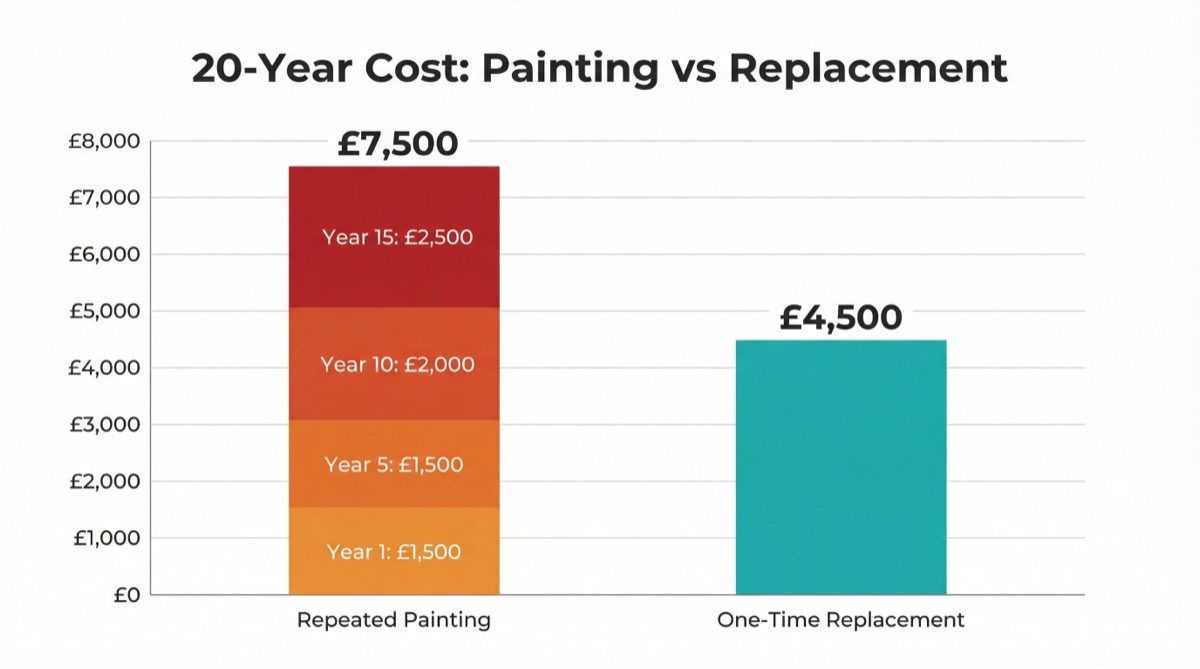
A professional spray job costing £1,500 needs repeating every 7-8 years. Over 20 years, that means two to three repaints: £3,000-£4,500 in painting costs alone. And at the end of those 20 years, you still have the same ageing frames, the same draughts and the same security vulnerabilities.
A new aluminium shop front costing £3,500 lasts the full 20 years with nothing more than an occasional soapy wipe-down. Over 20 years, replacement is often the cheaper option — and you get a vastly better-performing shop front the entire time.
Why Modern Aluminium Is Powder-Coated (No Painting Needed)
Powder coating is not paint. It is a dry finishing process where electrically charged powder is sprayed onto aluminium and baked at 200°C. The result is a coating that is harder, more durable and more resistant to chipping, fading and corrosion than any wet paint.
Powder-coated aluminium lasts 20-25 years without attention. It does not peel, flake or fade in UV light. And it is available in the full RAL colour range — over 200 colours. Install once, forget about repainting for decades.
Material-by-Material: Paint or Replace?
Different materials age differently, and the paint-or-replace calculation changes depending on what your current shop front is made from.
Timber Shop Fronts
Timber shop fronts need repainting every 5-7 years — that is not optional. Unpainted timber absorbs moisture, swells, cracks and eventually rots. If your frames are still solid with no rot or structural movement, repainting is the right call. If you are finding soft spots, crumbling sections or frames pulling away from the masonry, the timber has had its day. Typical lifespan: 10-15 years with diligent maintenance.
UPVC Shop Fronts
UPVC does not need painting in the traditional sense, but it degrades. After 10-12 years, it discolours (yellowing is common), becomes brittle and loses structural integrity. Specialist UPVC spray paint can extend the life by 5-7 years. But if frames are already brittle, cracked or warped, painting is cosmetic masking. Replacement with aluminium is the long-term solution.
Aluminium Shop Fronts
If your existing aluminium shop front has faded powder coating, professional spraying can restore it effectively. Aluminium does not rot, rust or warp, so the structure is almost certainly sound. This is one of the best-value painting jobs going. The only reason to replace an existing aluminium shop front is if you want a different style, layout or glass specification — our shop front design ideas guide can help you decide what direction to take.
Do You Need Planning Permission?
This catches people out more often than you would expect.
Planning Permission for Painting
In most cases, no. However, properties in conservation areas may need consent to change the colour. Listed buildings require listed building consent for any external alteration, including repainting. And if the painting incorporates advertising or signage, separate advertisement consent may be needed.
Planning Permission for Replacement
Like-for-like replacement (same size opening, same general appearance) often falls under permitted development rights. However, altering the opening size, changing materials in a conservation area, or modifying the fascia may require a full planning application. Our guide on planning permission for commercial glazing walks through the application process. Always check with your local council before committing.
Making Your Decision: Quick Assessment Checklist
Run through these ten questions. Be honest with yourself — the answers will tell you whether painting or replacement is the right move.
| # | Question | If Yes… |
|---|---|---|
| 1 | Are your frames structurally sound with no warping, bowing or rot? | Painting may be suitable |
| 2 | Can you feel draughts through closed windows and doors? | Replacement recommended |
| 3 | Is there condensation between your double-glazed panes? | Replacement recommended |
| 4 | Do you have single glazing? | Replacement strongly recommended |
| 5 | Has paint failed within 2-3 years of the last repaint? | Substrate issue — replacement recommended |
| 6 | Are your energy bills unusually high for your premises size? | New glazing could help — consider replacement |
| 7 | Have you had a break-in or security concern? | Replacement with toughened glass recommended |
| 8 | Is the only problem a faded or dated colour? | Painting is likely sufficient |
| 9 | Do you own the property (or have a long lease of 10+ years)? | Replacement offers better long-term value |
| 10 | Is your shop front over 15 years old? | Strongly consider replacement regardless of appearance |
Scored 3 or more toward replacement? It is worth getting a professional assessment. Contact us for a free, no-obligation consultation and we will give you an honest recommendation — even if that recommendation is “just get it painted.”
Frequently Asked Questions
How much does it cost to paint a shop front in the UK?
DIY materials cost £100-£300. Professional spraying ranges from £500 to £3,500 depending on size and condition. A typical single-unit high street shop costs £800-£2,000 for a professional spray job.
Can you paint aluminium shop fronts?
Yes. Aluminium can be professionally sprayed with specialist metal-bonding coatings and the results are excellent. However, new aluminium shop fronts come factory powder-coated in your chosen colour — a finish that far outlasts wet paint.
How long does shop front spray paint last?
Professional spray finishes last 5-15 years, with 8-10 years being average in typical UK conditions. Durability depends on surface preparation, paint grade and exposure. Factory powder coating on new aluminium lasts 20-25 years.
Is it cheaper to paint or replace a shop front?
Painting is cheaper upfront (£500-£3,500 vs £2,500-£7,350). But over 20 years, painting often costs more due to 2-3 repaints. A £1,500 spray job repeated three times totals £4,500 — close to the cost of an aluminium replacement that lasts the full 20 years maintenance-free.
Do I need planning permission to paint my shop front?
Generally no. Exceptions include conservation areas (colour changes may need consent), listed buildings (any external alteration needs consent), and paintwork incorporating advertising. Always check with your local planning authority if unsure.
What are the signs that a shop front needs replacing?
Key indicators: draughts through closed frames, condensation between panes, warping or bowing, timber rot, recurring paint failure (peeling within 2-3 years), single glazing, and security weaknesses. If your shop front shows any of these, painting will not fix the underlying problem.
What is powder coating and why does it matter?
Powder coating is a dry finishing process where coloured powder is electrostatically applied to aluminium and baked at high temperature. It produces a harder, more durable coating than wet paint — lasting 20-25 years with resistance to fading, chipping and corrosion. Available in the full RAL colour range.
How long does a new aluminium shop front last?
The frames have a functional lifespan of 30-45 years. The powder-coated finish lasts 20-25 years. Aluminium does not rust, rot or warp, and needs only occasional cleaning with warm soapy water.
Can you spray paint a shop front in winter?
Possible but not ideal. Most spray paints need temperatures above 5-10°C, low humidity and dry conditions. British winters rarely cooperate. For the best results, schedule spraying between April and October.
Is shop front refurbishment worth it?
A cosmetic respray is worth it if the structure is sound and you want to boost kerb appeal on a budget. A full refurbishment (new glazing, frames and hardware) is worth it for any business that owns its premises or holds a long lease. Shop front appearance directly affects footfall and customer perception — first impressions are formed in seconds.
The Bottom Line: Honest Advice From Shop Front Installers
We install shop fronts for a living, so we could tell you that every tired-looking frontage needs replacing. But that would not be honest. If you are weighing up the full cost of roller shutters and other security upgrades alongside a respray, it is worth comparing what each option delivers over time.
If your shop front is structurally sound and the only issue is cosmetic, get it professionally sprayed. It will cost a fraction of replacement and buy you another 5-10 good years.
But if you are dealing with draughts, failed seals, condensation, rot, warping or security concerns — painting is a sticking plaster. Every pound spent on painting a failing shop front is a pound that could go toward a permanent solution.
Modern powder-coated aluminium shop fronts cost less than most people expect, last 20-25+ years without repainting, and deliver genuine improvements to energy efficiency, security and street presence. Over the long term, they frequently work out cheaper than repeated painting cycles.
Not sure which route is right for your premises? We are happy to take a look and give you a straight answer — even if that answer is “just paint it.” Get in touch for a free consultation, or use our shop front cost calculator to see what replacement would cost for your specific frontage.