

Key Takeaways:
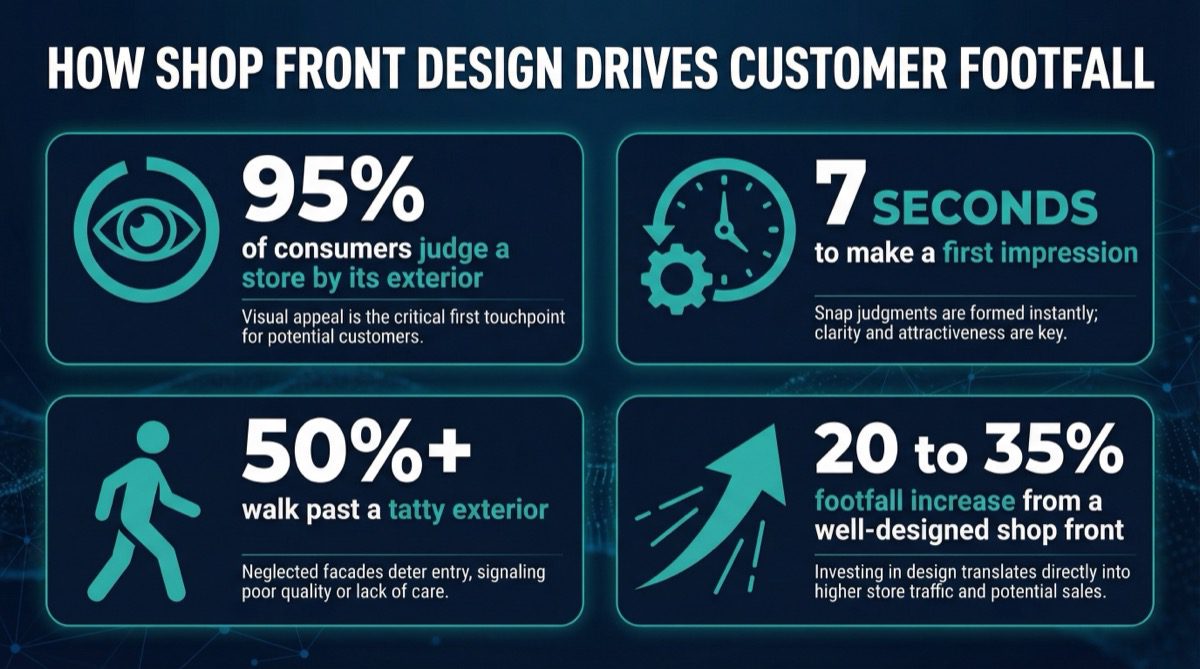
- 95% of consumers judge a store by its exterior, and over 50% will walk straight past a shop front that looks tired or neglected.
- A well-designed shop front increases street-side foot traffic by 20-35%, with passers-by five times more likely to enter on impulse.
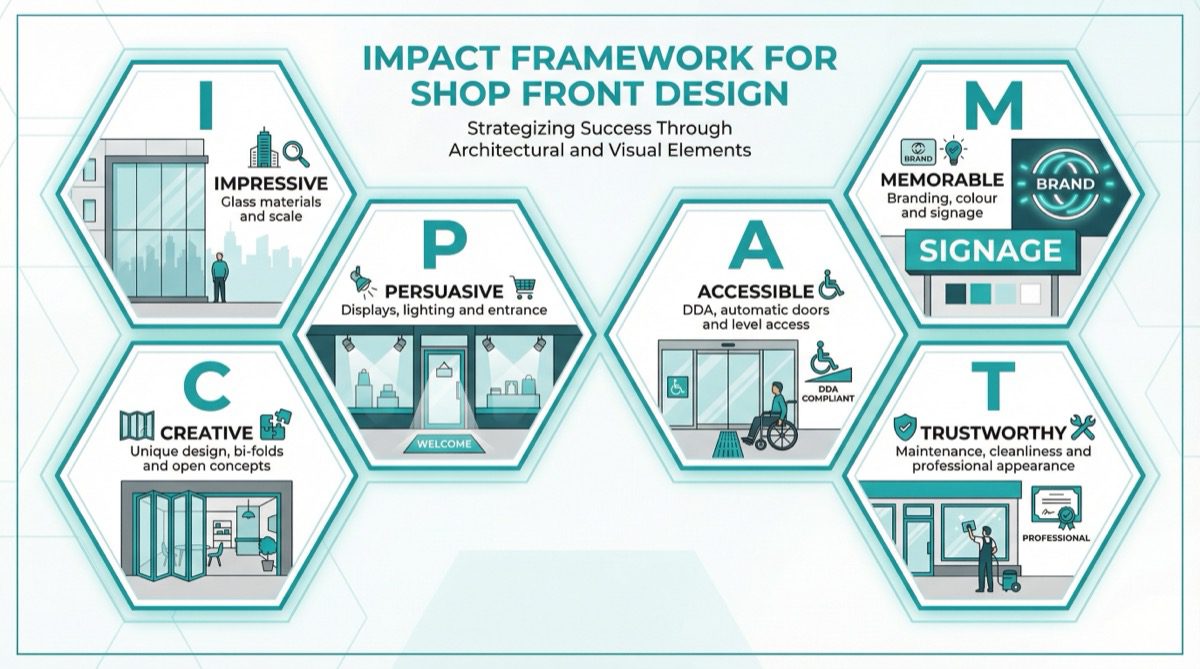
- The IMPACT framework — Impressive, Memorable, Persuasive, Accessible, Creative, Trustworthy — gives a structured approach to shop front design that drives footfall at every stage.
- Material choice matters: aluminium delivers a modern, low-maintenance finish; toughened glass maximises product visibility; timber suits heritage and boutique settings.
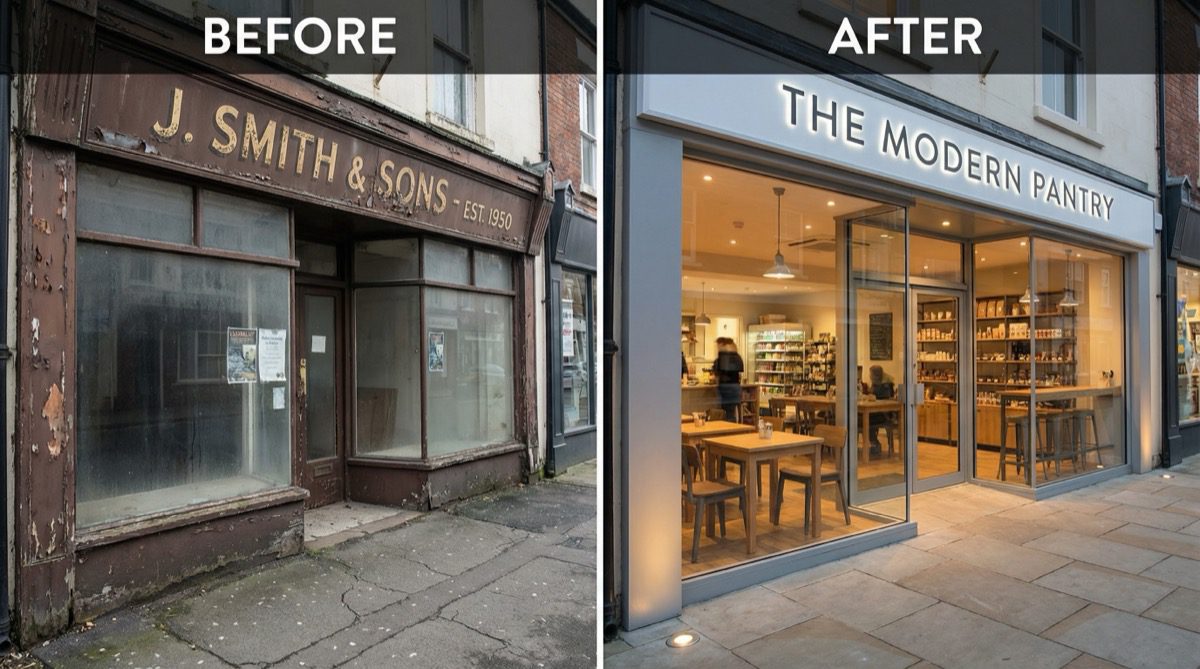
- Quick wins like cleaning glass, upgrading lighting, and refreshing signage can improve footfall before committing to a full shop front replacement.
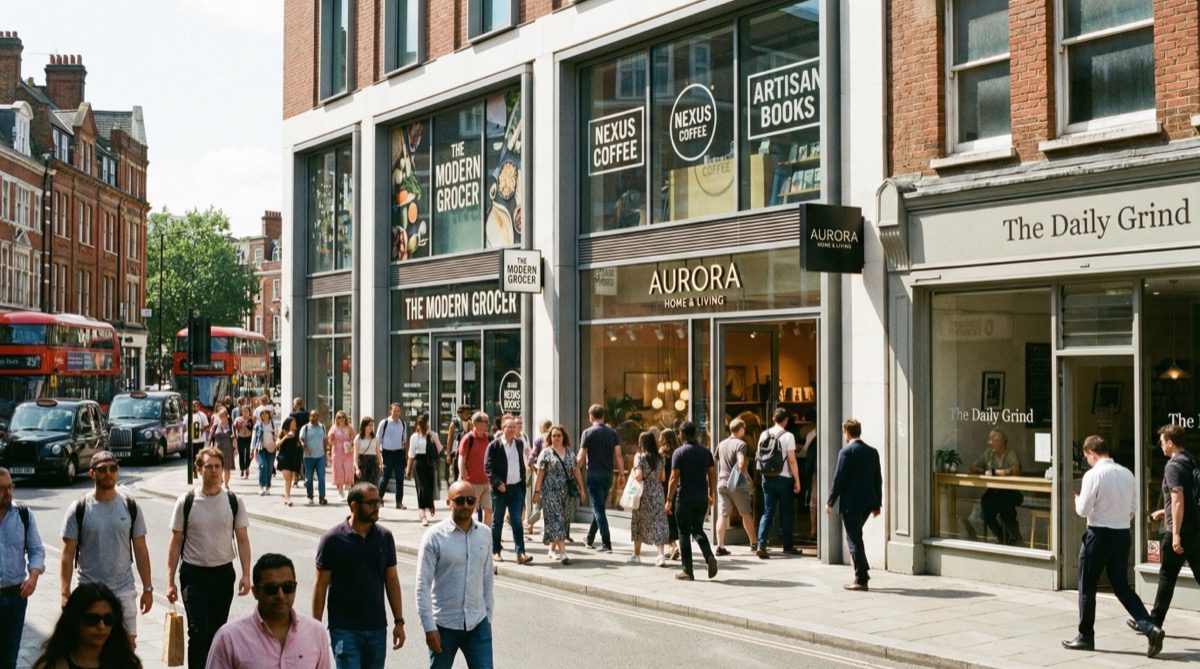
A pedestrian rounds the corner onto your street. They have never visited your business before. In roughly seven seconds, they will form a first impression of your premises — and make up to 11 snap judgments about your brand. Whether they cross the threshold or walk straight past depends almost entirely on what your shop front communicates in that brief window.
This is not guesswork. A Retail Customer Experience study found that 95% of consumers consider a store’s exterior appearance an important factor when deciding where to shop. More than half said they would avoid premises that looked worn or dirty from the outside. Yet many UK businesses still treat their shop front as a fixed cost rather than what it actually is: the single biggest driver of walk-in trade.
With UK high street footfall showing its strongest recovery since early 2025 according to BRC data, the competition for passing trade has never been fiercer. Every passer-by who walks past your door is a lost sale. This guide breaks down exactly how shop front design affects customer footfall — backed by the data, grounded in over 20 years of installation experience, and structured around our IMPACT framework.
The Data: How Shop Front Appearance Drives Footfall
Business owners often ask us whether a new shop front is really worth the investment. The research answers that question clearly.
The numbers paint a consistent picture. 80% of passers-by say they would enter a shop they had never visited before if the exterior looked inviting and clean. Flip that around, and more than 50% of consumers will walk straight past a premises with a tatty exterior — they will not even slow down. When 70% of first-time customers decide whether to enter based purely on external appearance, your shop front is not just a wall with glass in it. It is a sales tool working around the clock.
The commercial impact is measurable. An appealing shop front can increase street-side foot traffic by 20% to 35%, and passers-by become five times more likely to enter on impulse when the facade catches their eye. On a busy high street, even a 20% improvement in that conversion rate means a significant number of additional walk-in customers each week.
Then there is the deterrent effect of getting it wrong. 52% of shoppers have avoided a business entirely because it looked dirty from the outside. One in three consumers have chosen not to enter because the premises “didn’t look like somewhere I would normally shop.” These are not people who came in and left disappointed — they never entered at all. You cannot sell to a customer who never walks through the door.
The IMPACT Framework: A Structured Approach to Shop Front Design
After over two decades of designing and installing commercial shop fronts across the UK — from independent boutiques with no existing brand identity to corporate chains with strict brand manuals — we developed the IMPACT framework. It breaks shop front design into six elements, each targeting a different stage of how customers perceive and engage with your premises.
I — Impressive: Create Recognition from a Distance
Impact starts at a distance. Between 100 and 20 metres away, a passer-by’s brain is processing basic questions: What is that business? Does it look relevant to me? Is it worth crossing the street for?
Your signage carries most of this weight. It needs to be legible from at least 30 metres — and that means getting the scale, contrast, and positioning right. The data backs this up: 76% of consumers have visited a store they had never planned to enter simply because the sign caught their eye, and attractive signage alone can boost foot traffic by up to 17%.
The materials and finish of your shop front contribute too. A sleek aluminium shop front with a powder-coated finish in a bold brand colour stands out against neighbouring premises. The goal at this stage is simple: be seen, be recognised, and give people a reason to look twice.
M — Memorable: The WOW Factor Up Close
Between 20 and 5 metres, the customer shifts from noticing your shop to evaluating it. This is where window displays, colour, and visual merchandising do their work.
Retailers who refresh their window displays regularly see up to a 50% boost in conversion rates. The recommended refresh cycle is every four to six weeks — yet many businesses leave the same display up for months. Fresh displays signal an active, thriving business. Stale ones suggest the opposite.
Colour plays a powerful role at this distance too. Research from the Institute for Colour Research found that 62-90% of consumers form a subconscious judgment about a retail environment based on colour alone — within just 90 seconds. Warm tones like red and amber create urgency and draw attention. Cooler tones like teal and navy build trust and encourage people to linger. The right colour palette for your shop front depends on what you sell and the impression you want to leave. For inspiration, see our guide to unique shop front design ideas.
P — Persuasive: Brand Reinforcement at Eye Level
As customers close the final few metres to your entrance, they lose sight of overhead signage. Their gaze drops to eye level — the window display, door branding, and any messaging at or below the fascia. This is where brand consistency becomes critical.
Colour amplifies brand recognition by 80% according to research from the University of Loyola, Maryland. If your overhead signage says one thing and your window graphics say another, you create confusion rather than confidence. Every element visible at close range should reinforce the same identity: the same typeface, the same colour palette, the same standard of finish.
We saw this done brilliantly by Stradivarius at Westfield Stratford, where the brand created a fabricated upper-floor facade above a single-storey unit. The entire frontage, from street level to the roofline, reinforced one cohesive brand identity. You do not need that scale of investment, but the principle applies to every shop front regardless of size.
A — Accessible: Wide, Welcoming Entrances
A shop front can look stunning from the outside and still fail commercially if the entrance puts people off. Narrow doorways, heavy doors, raised thresholds, and cluttered entrance areas all create friction — and friction costs you customers.
Large, open entrances give passers-by a clear view into the shop, reduce the sense of overcrowding at the doorway, and comply with the Equality Act 2010 — which requires reasonable adjustments for disabled access including level thresholds and adequate door widths.
Retail designers call the first 5 to 10 feet inside the entrance the “decompression zone” — where customers transition from the street to the shop interior. A cramped zone makes visitors uncomfortable before they have even started browsing. A generous, well-lit entrance with wide aluminium framing and automatic doors removes every barrier to entry. Bear in mind that structural changes are governed by your council and landlord, so check what is permitted before committing to a design.
C — Creative: Lighting, Materials, and Design Details
This is where good shop front design becomes great shop front design. The creative details — lighting choices, material finishes, architectural features — are what separate a forgettable premises from one that people photograph, share, and remember.
Lighting deserves particular attention. Strategic lighting design can increase customer engagement by 20-30%, and LED lighting has been shown to boost foot traffic by 15% in controlled studies. A well-lit entrance makes people feel welcome after dark, while illuminated signage keeps your brand visible during the six months of the year when UK trading hours extend beyond sunset. Our shop front lighting guide covers the full range of options.
Material choice feeds into the creative impact too. Toughened glass shop fronts deliver maximum transparency, letting your interior merchandising do the talking from the street. Architectural features like bi-folding doors — popular with cafes and restaurants looking to blur indoor and outdoor dining, with costs that vary by size and configuration — that open the entire frontage on warm days, a glass or aluminium canopy that shelters customers from the weather, or open-plan concepts that blur the line between inside and outside, create genuine theatre on the high street.
T — Trustworthy: Maintenance, Cleanliness, and Professional Finish
Every element of the IMPACT framework falls apart if the shop front is not properly maintained. A beautifully designed frontage that has not been cleaned in months sends exactly the wrong message — it tells customers you do not care about the details.
The data here is stark. 52% of consumers have avoided a business because it looked dirty from outside, and 93% of adults would avoid a store with visible facility flaws. Maintenance is not optional. It is the foundation that everything else sits on.
Build a simple routine: clean windows and entrance areas daily, check lighting and signage monthly, and review paintwork and structural condition annually. Aluminium shop fronts have a significant advantage here — powder-coated aluminium resists corrosion, does not rot, and needs only a wipe-down to maintain its appearance for decades. It is one of the reasons aluminium has become the default material for commercial premises across the UK. For a full breakdown of replacement costs and when it makes sense to invest, see our guide to shop front costs.
Choosing the Right Shop Front Material for Maximum Footfall
The material your shop front is built from shapes how customers perceive your business before they read a single word of signage.
Aluminium is the most widely specified material for modern commercial shop fronts. It delivers clean lines, a contemporary image, and can be powder-coated in virtually any RAL colour to match your brand. Resistant to corrosion, warping, and weather damage, it requires minimal upkeep over a lifespan of 30 years or more. For most businesses, aluminium shop fronts remain the strongest choice.
Toughened glass maximises product visibility by removing visual barriers between the street and your interior — and when specified as double glazing rather than single, it also delivers substantial energy savings and noise reduction. Choosing the right type of glass for your shop front is worth getting right from the start. Floor-to-ceiling toughened glass shop fronts create a premium, transparent aesthetic that works well for fashion boutiques, jewellers, hair salons, electronics stores, and showrooms where the product is the draw.
Timber brings warmth and character that suits heritage buildings, conservation areas, and independents wanting a handcrafted look. Bakeries, bookshops, independent coffee shops, and artisan food shops benefit from the personality timber provides, though the trade-off is higher maintenance — timber needs regular treatment to prevent weather damage, unlike aluminium.
Quick Wins: Improve Your Shop Front’s Footfall Today
Not every business is ready for a full shop front replacement. If that is where you are right now, these practical improvements can make a noticeable difference to footfall without a major investment.
Clean every glass surface inside and out. It sounds basic, but dirty windows are one of the most common deterrents we see. Fingerprints on doors, dust on window displays, and film buildup on glass panels all reduce visibility and make premises look neglected.
Upgrade your lighting. Even without replacing the shop front itself, adding LED trough lights above your fascia, strip lighting around window displays, or entrance downlights can transform how your premises looks after dark. Read our full shop front lighting guide for the options.
Refresh your signage. Faded, cracked, or peeling signage tells every passer-by that your business is not investing in itself. 76% of consumers say poor signage deters them from entering — our guide to choosing the right shop front signs covers how to get this right.
Update your window displays. Refresh them every four to six weeks minimum. Feature your best products, use colour strategically, and make sure the display looks intentional rather than cluttered.
Repair visible damage immediately. Chipped paintwork, cracked glass, dented frames, and broken door handles all signal neglect — and for ground-floor premises, adding electric roller shutters can protect a new frontage from vandalism overnight. If damage is widespread, it may be time to consider replacing your shop front altogether. Even small damage undermines the impression your shop front creates.
Review your entrance. Walk in as a first-time customer would. Is anything blocking the doorway — A-boards, stock, delivery pallets? Remove every obstacle between the pavement and the interior of your shop.
How Huxley & Co Can Help
We have spent over 20 years designing and installing commercial shop fronts across the UK, from independent retailers to national chains. We are FENSA registered, CHAS accredited, and Constructionline approved. Our guide on how to choose a shop front installer explains what credentials to look for and the questions to ask before hiring.
Whether you need a complete shop front redesign, a material upgrade to aluminium or toughened glass, or a targeted improvement like new lighting or automatic doors, we handle everything from consultation to installation.
Call us on 020 7112 4849, email info@huxleyandco.co.uk, or get in touch through our website to arrange a free consultation.
Frequently Asked Questions
How does shop front design affect footfall?
Shop front design directly influences whether passers-by enter your premises. Research shows 95% of consumers consider exterior appearance when choosing where to shop, and an appealing shop front can increase foot traffic by 20-35%. Materials, signage, lighting, entrance design, and maintenance all play a role in converting passing pedestrians into walk-in customers.
What percentage of customers judge a shop by its exterior?
95% of consumers say exterior appearance is an important factor in their shopping decisions. 70% of first-time customers decide whether to enter based solely on external appearance, and more than 50% will walk past a premises that looks tired or poorly maintained.
What is the best material for a shop front?
Aluminium is the most popular choice for modern commercial shop fronts due to its durability, low maintenance, and design flexibility. Toughened glass suits businesses that rely on product visibility. Timber works well for heritage buildings and boutique retailers. The best material depends on your brand, your location, and the impression you want to project.
How much can a good shop front increase footfall?
Studies show a well-designed shop front can increase street-side foot traffic by 20% to 35%. Attractive signage alone adds up to 17%, strategic lighting increases engagement by 20-30%, and regularly refreshed window displays boost conversion rates by up to 50%.
What is the 7-second rule for shop fronts?
People form a first impression within seven seconds of seeing a business. During those seven seconds, they make up to 11 separate judgments about your brand. Your shop front — its signage, materials, cleanliness, and entrance — needs to communicate the right message almost immediately.
How does lighting affect customer footfall?
Strategic lighting increases customer engagement by 20-30% and has been shown to increase foot traffic by 15% in controlled studies. Well-lit entrances feel welcoming and safe, while illuminated signage keeps your business visible during winter trading hours. See our shop front lighting guide for a full breakdown.
How often should you update your shop front?
Window displays should be refreshed every four to six weeks. Signage and paintwork should be reviewed annually. A full shop front replacement is typically worthwhile every 15 to 25 years depending on the material, though aluminium fronts often last at the upper end of that range with minimal maintenance.
What are the legal requirements for shop fronts in the UK?
Shop front installations may require planning permission, particularly in conservation areas or for listed buildings. Illuminated signs need advertisement consent from your Local Planning Authority. The Equality Act 2010 requires reasonable adjustments for disabled access. Building regulations apply to structural changes, glazing safety, and fire safety. We advise checking with your local council and landlord before commencing any work.