

Key Takeaways:
- A well-designed salon shop front can increase walk-in trade by up to 40%, making it your most cost-effective marketing asset.
- Aluminium frames start from £350/m², toughened glass from £450/m², and timber from £520/m² fully installed.
- Frosted and tinted glass options let you balance street-level visibility with client privacy during treatments.
- Most salon shop front installations take 2–4 weeks from survey to completion, with fitting done in 1–3 days.
- Planning permission is usually not required for like-for-like replacements, but conservation areas and new signage have separate rules.
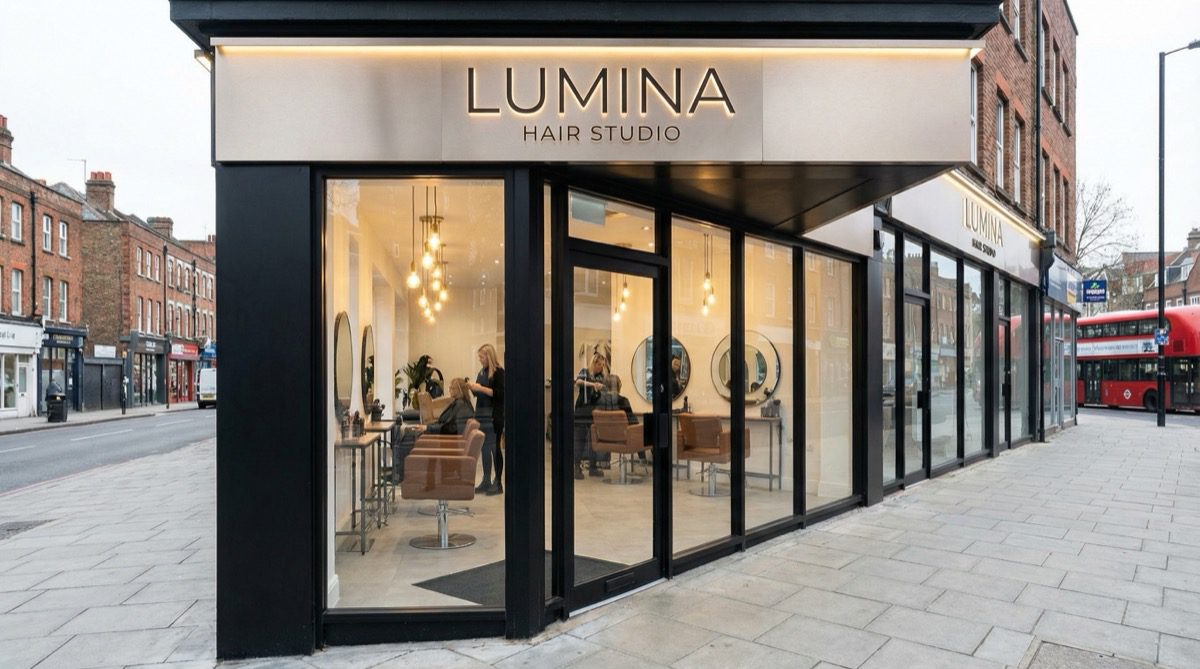
Walk down any thriving high street and you will notice something about the salons doing well: their shop fronts look the part. A tired, dated frontage with fogged-up windows and peeling signage tells potential clients everything they need to know — and none of it is good. Meanwhile, the salon two doors down with crisp aluminium frames, spotless glazing, and a softly glowing fascia sign has a full appointment book and a steady stream of walk-ins.
Your salon’s shop front is the first point of contact between your brand and every person who passes by. Research consistently shows that consumers form an opinion about a business within seven seconds of seeing its exterior. For a hair salon, where personal trust and aesthetic judgement are everything, those seven seconds matter more than in almost any other industry.
This guide covers everything you need to know about designing and installing a hair salon shop front — from materials and glass types to costs, planning permission, and the installation process itself.
Why Your Salon Shop Front Matters More Than You Think
First Impressions Drive Walk-In Trade
Hair salons rely on walk-in clients more than most businesses. Unlike a solicitor or an accountant, you do not need an appointment to decide you want a trim. That means your shop front is doing active selling work every hour the high street is busy — and every hour it is not, if your signage is illuminated.
Think of it this way: a salon shop front with floor-to-ceiling clear glass lets passers-by see the buzz inside. They see stylists working, clients looking relaxed, a clean and well-lit interior. That visual proof of a thriving business is worth more than any Instagram post. Conversely, a blocked-out or cluttered frontage creates suspicion. What are they hiding? Is it even open?
A well-planned commercial shop front turns your salon into its own advertisement, working 24 hours a day, seven days a week.
How the Right Shop Front Reflects Your Salon Brand
Every salon has a positioning, whether the owner has consciously defined it or not. A luxury colour salon in Kensington communicates something very different from a busy walk-in barbershop in Manchester. Your shop front needs to match that positioning instantly.
A sleek, frameless glass frontage with halo-lit lettering says “premium.” A warm timber frame with hand-painted signage says “boutique.” A clean aluminium shop front with bold vinyl graphics says “modern, professional, accessible.” The materials, glass, signage, and even the colour of the frames all communicate your brand before a single word is read.
Getting this wrong is expensive — not because of the installation cost, but because of the clients you never attract.
Best Materials for a Hair Salon Shop Front
The three main materials used in commercial shop front installations across the UK are aluminium, toughened glass, and timber. Each has distinct advantages for salon environments, and the right choice depends on your brand positioning, budget, and building context.
Aluminium Shop Fronts for Salons
Aluminium shop fronts are the most popular choice for salons on UK high streets, and for good reason. The slim frame profiles maximise the glazed area, giving your salon that open, inviting look that draws people in. Modern aluminium systems typically have sightlines as narrow as 50mm, meaning nearly the entire frontage is glass.
For salons specifically, aluminium handles humidity well. Hair salons generate significant moisture from washing stations, steamers, and dryers. Aluminium frames with thermally broken profiles will not warp, rot, or swell in these conditions the way untreated timber can.
Powder coating gives you virtually unlimited colour options. RAL colour matching means you can match frames exactly to your brand palette. Matte black, anthracite grey, and soft sage green are particularly popular with salons in 2026, and the finish carries a typical guarantee of 25 years.
Starting from £350/m² fully installed.
Toughened Glass Shop Fronts for Salons
For salons aiming at the premium end of the market, toughened glass shop fronts deliver a striking, frameless aesthetic that is hard to beat. Floor-to-ceiling glass panels with minimal structural framing create a seamless connection between your salon interior and the street outside.
Toughened (tempered) glass is four to five times stronger than standard float glass. If it does break, it shatters into small, relatively harmless granules rather than dangerous shards — a legal requirement for any glass below 800mm from floor level in commercial settings.
High-end salons in London, Manchester, and Birmingham regularly choose frameless glass frontages because they let the interior design do the talking. When your salon looks stunning inside, you want nothing between that and the high street.
Starting from £450/m² fully installed.
Timber Shop Fronts for Salons
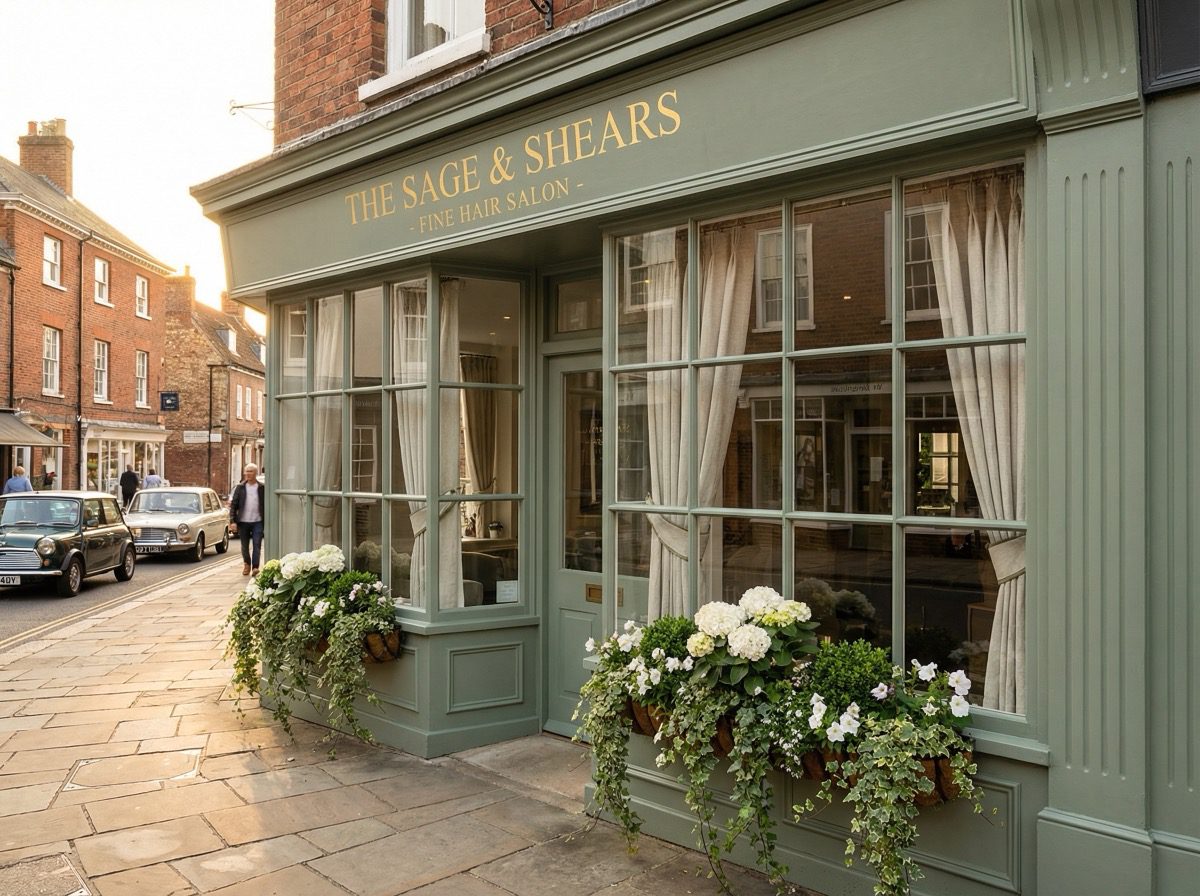
If your salon has a boutique, artisan, or heritage identity, timber shop fronts offer a warmth and character that aluminium and glass simply cannot replicate. Hardwood frames in oak, sapele, or accoya bring natural texture and a sense of craftsmanship to your exterior.
Timber is also the go-to material for salons in conservation areas, where local planning authorities often require traditional materials to preserve the streetscape’s character. A well-crafted timber shop front with period-appropriate detailing can actually make securing planning approval easier in these sensitive locations.
The trade-off is maintenance. Timber needs repainting or re-staining every 5–8 years, compared to aluminium’s essentially zero maintenance. Many boutique salon owners see this as a worthwhile investment in their brand aesthetic.
Starting from £520/m² fully installed.
Aluminium vs Glass vs Timber: Salon Shop Front Comparison
| Feature | Aluminium | Toughened Glass | Timber |
|---|---|---|---|
| Starting Price | From £350/m² | From £450/m² | From £520/m² |
| Maintenance | Very low — occasional wipe-down | Low — glass cleaning only | Medium — repaint every 5–8 years |
| Lifespan | 30+ years | 25+ years | 20–30 years (with maintenance) |
| Colour Options | Unlimited RAL powder coating | Tinted, frosted, or clear | Stained, painted, or natural |
| Best For | Modern high-street salons | Premium, luxury salons | Boutique & conservation areas |
| Humidity Resistance | Excellent — no corrosion | Excellent | Requires treatment & ventilation |
| Thermal Performance | Good (thermally broken profiles) | Good (double-glazed option) | Naturally insulating |
Choosing the Right Glass for Your Salon Shop Front
Glass selection is where salon shop fronts get genuinely interesting, because salons have a unique tension that most retail businesses do not: you want visibility to attract clients, but you also need to consider the privacy of people mid-treatment. The right glass solves both problems at once. Our guide on what glass is best for shop fronts covers the full range of options, but here is how they apply specifically to salons.
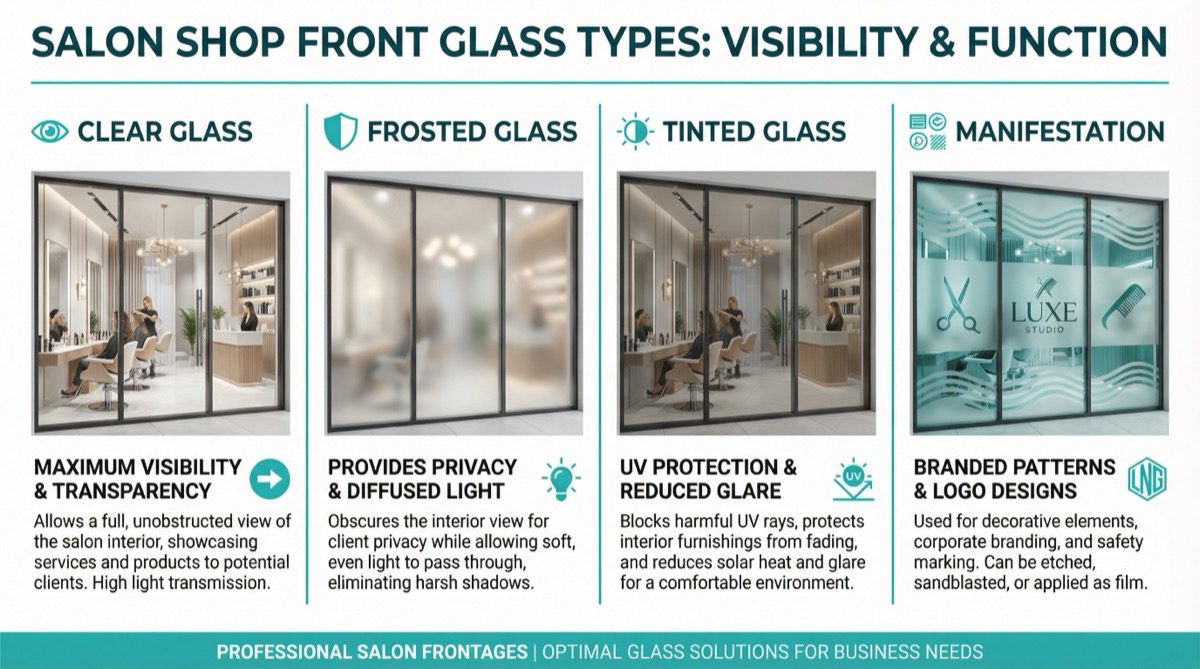
Clear Glass — Maximum Visibility
Clear toughened glass is the default choice for salon shop fronts, and for most salons it is the right one. Seeing stylists at work, a welcoming reception area, and well-presented retail shelves builds instant confidence in potential clients. It is also the most effective way to let natural light flood into the salon, reducing your lighting costs and creating a more pleasant working environment for your team.
Clear glass works best when your salon interior is consistently well-presented. If the reception is always tidy, the styling stations look professional, and the retail display is stocked and lit, you want the world to see it.
Frosted Glass — Privacy Without Sacrificing Light
Salons offering treatments such as facials, waxing, threading, or scalp treatments near the front of the premises often need to screen those areas from street view. Frosted glass solves this elegantly. It transmits roughly 80% of natural light while completely obscuring detail from outside.
You have two main options. Sandblasted glass has the frosted effect built permanently into the glass — it cannot peel or degrade. Frosted film is applied to standard clear glass and is more cost-effective (typically £100–£300 to add), with the advantage that it can be removed or changed if your layout evolves.
A popular approach for salons is a partial frosted band — clear glass above and below with a frosted strip at seated head height. This provides privacy where it matters while keeping the frontage open and inviting.
Tinted Glass — Style and Sun Protection
Tinted glass adds a premium, sophisticated feel to a salon frontage while serving two practical purposes. First, it reduces solar glare, which is a genuine issue for salons with south- or west-facing windows — glare on mirrors and styling stations makes it difficult for stylists to work accurately. Second, it blocks a significant proportion of UV light, protecting your retail colour products, treatments, and displays from fading.
Grey and bronze tints are the most popular choices for salons. They add a subtle warmth to the exterior without making the interior feel dark.
Manifestation Designs — Branding on Glass
If you have large uninterrupted glass panels, you are legally required to add manifestation markings to prevent people from walking into them (Building Regulations Approved Document K and BS 8300).
Smart salon owners use this as a branding opportunity. Frosted vinyl with your salon logo, a pattern of dots in your brand colour, etched-effect lettering with your tagline, or a full decorative panel — all count as manifestation while reinforcing your brand identity. It is one of the most cost-effective ways to make your shop front distinctive.
Double and Triple Glazing for Salon Comfort
Thermally broken aluminium frames paired with double-glazed sealed units can reduce heat loss through the shop front by up to 70% compared to single glazing. For salons on busy roads, they also cut street noise noticeably.
There is a salon-specific benefit too: condensation control. Salons generate a lot of internal moisture. Single-glazed frontages in winter often end up streaming with condensation, which looks terrible from outside and damages frames over time. Double glazing largely eliminates this.
Salon Shop Front Door Options
The entrance is the hardest-working element of your shop front. It needs to handle high footfall, remain accessible to everyone, keep heat in during winter, and still look the part. Adding a shop front canopy above the entrance creates a sheltered transition zone that keeps clients dry and frames the doorway.
Hinged Doors — The Classic Choice
Standard aluminium-framed hinged doors with toughened glass panels are reliable, cost-effective, and familiar. A single door suits standard 900mm–1,000mm doorways, while double doors work for wider entrances. The main drawback is the swing space required, which can be an issue for salons with limited pavement area.
Sliding Doors — Space-Saving Solution
Sliding doors do not swing outward onto the pavement or inward into your reception area, making them ideal for narrow-frontage premises. Modern systems operate on concealed tracks and can be fully automated for hands-free operation.
Bi-Fold Doors — Open Up Your Salon to the Street
For salons wanting an open-air feel in warmer months, bi-fold doors allow you to fold back the entire frontage. Our guide to bifold door costs breaks down what to budget for commercial installations. This works brilliantly in pedestrianised areas or courtyard settings and draws attention from a considerable distance.
Automatic Doors — Accessibility and Convenience
Automatic sliding doors are increasingly popular with salons for two reasons. First, they meet Equality Act 2010 accessibility requirements — wheelchair users, clients with pushchairs, and anyone with mobility difficulties can enter without assistance. Second, in a busy salon where staff have their hands full, an automatic door removes one more friction point from the client experience.
Integrating Signage Into Your Salon Shop Front
The best results come from designing signage as an integral part of the shop front installation, not bolting something on afterwards.
Fascia Signs and Sign Trays
The fascia panel above your glazing is prime real estate. A purpose-built aluminium sign tray, flush-mounted into the shop front frame, gives you a clean, integrated look. Materials range from aluminium composite panels (ACM) to brushed stainless steel. Typical costs run from £300 to £1,500 depending on size, material, and whether illumination is included.
Illuminated and Halo-Lit Lettering
Illuminated signage is one of the highest-return investments a salon can make. Your salon name glowing on a dark winter evening is marketing that never sleeps. Two main options are popular:
- Face-lit letters: The front face of each letter is illuminated, creating a bright, bold look that is visible from a distance. Great for busy high streets.
- Halo-lit letters: Light shines from behind each letter, creating a subtle glow against the fascia. This is the go-to choice for premium and luxury salons wanting an understated, elegant presence.
LED illumination is standard for both — energy-efficient, long-lasting (50,000+ hours), and producing virtually no heat.
Window Manifestation and Vinyl Graphics
Beyond the legal requirement for safety manifestation on large glass panels, window graphics are a versatile branding tool. Frosted vinyl with your salon logo, opening hours, and services costs very little (often under £200) but makes an outsized contribution to your street presence. One-way vision graphics, printed full-colour vinyl, and etched-effect films offer further creative possibilities.
Advertisement Consent for Signage
Even when your shop front itself does not need planning permission, new signage may require separate advertisement consent from your local authority. This applies to illuminated signs, projecting signs, and signs above a certain size. A good installer will flag this during the design phase.
How Much Does a Hair Salon Shop Front Cost?
The cost depends on the material, the size of your frontage, the glass specification, and any additional features. Here are realistic figures based on current UK pricing.
Cost Breakdown by Material
| Material | Cost per m² | Small Salon (7.5m²) | Medium Salon (12m²) | Large Salon (21m²) |
|---|---|---|---|---|
| Aluminium | From £350 | From £2,625 | From £4,200 | From £7,350 |
| Toughened Glass | From £450 | From £3,375 | From £5,400 | From £9,450 |
| Timber | From £520 | From £3,900 | From £6,240 | From £10,920 |
Prices include supply, installation, and VAT. Based on standard specifications. Actual costs vary depending on site conditions, access, and specification. For a personalised quote, see our shop front cost guide or request a free survey.
Typical Salon Shop Front Price Examples
- Small salon (3m frontage): £2,500–£4,500 for a standard aluminium and glass shop front with a single door and basic fascia signage.
- Medium salon (5m frontage): £4,500–£7,000 for aluminium framing, double-glazed units, an automatic door, and integrated illuminated signage.
- Large salon (8m+ frontage): £7,000–£12,000+ for a premium specification with frameless glass sections, bi-fold or automatic doors, halo-lit signage, and a roller shutter.
What Affects the Final Price?
Several factors affect the final price:
- Glass specification: Upgrading from single to double glazing, or adding tinted/frosted glass, adds to the cost.
- Door type: Automatic doors cost more than standard hinged doors.
- Security features: Roller shutters add from £180/m² (manual) or £280/m² (electric).
- Custom powder coating: Bespoke RAL colours typically add £200–£800 depending on the number of frames.
- Signage integration: Built-in fascia signs and illuminated lettering add £300–£1,500.
- Removal of existing shop front: Strip-out and disposal is usually included, but complex removals may add cost.
- Access and location: Restricted access or pedestrianised streets requiring out-of-hours delivery can affect labour costs.
Planning Permission for Salon Shop Fronts
For most salon shop front replacements, the reality is more straightforward than owners expect.
When You Probably Do Not Need Planning Permission
If you are replacing your existing shop front on a like-for-like basis — same size opening, same general configuration — you typically do not need planning permission. Minor changes to materials and finishes (swapping timber for aluminium, for example) also usually fall outside the scope of planning control, provided the overall appearance is not significantly altered.
When You Do Need Planning Permission
You will likely need planning permission if:
- You are significantly changing the size or position of the shop front opening (enlarging a window, adding a new doorway).
- Your salon is in a conservation area — most alterations to shop fronts in conservation areas require planning approval.
- The building is listed — listed building consent is required for any alteration affecting character.
- You are adding new signage — illuminated signs, projecting signs, and large fascia signs usually require separate advertisement consent.
Building Regulations
Separate from planning permission, building regulations apply to structural elements of the shop front. Key requirements include:
- Structural integrity: The shop front and any supporting steelwork must be certified as structurally sound.
- Safety glazing: All glass at low level must be toughened or laminated to BS EN 12600.
- Thermal performance: New shop fronts must meet minimum U-value requirements under Part L of the Building Regulations.
- Accessibility: The entrance must comply with Part M, ensuring level or ramped access and a minimum clear opening width of 775mm (1,000mm recommended).
How a Professional Installer Handles This
A reputable shop front installation company will assess planning and building regulation requirements as part of the initial survey. At Huxley, we handle pre-application enquiries, prepare technical drawings for planning submissions, and liaise with building control officers throughout the project. You should not need to navigate this process alone.
The Salon Shop Front Installation Process
Here is how a typical salon shop front installation works from start to finish.
Step 1: Free Consultation and Site Survey
An experienced surveyor visits your salon to take precise measurements, assess the existing frontage, check planning constraints, and understand your brand and budget. This visit typically takes 30–60 minutes and is free of charge.
Step 2: Bespoke Design and Quotation
You receive detailed CAD drawings showing exactly how your new shop front will look, along with a fully itemised quotation. This is where you choose frame colours, glass types, door styles, and signage details. Everything is specified and priced transparently.
Step 3: Manufacturing
Your shop front is manufactured to your exact specifications. Aluminium frames are cut, welded, and powder-coated. Glass units are cut, toughened, and sealed. This stage typically takes 1–2 weeks.
Step 4: Professional Installation
Installation day is where it all comes together. For most salon shop fronts, fitting takes between 1 and 3 days. The old frontage is carefully removed, the new frames are installed and levelled, glass units are fitted and sealed, and doors are hung and adjusted.
Here is something salon owners always ask: do I need to close during installation? In most cases, no. We can board up the frontage at the end of each working day so the salon remains secure overnight. For salons wanting minimal disruption, out-of-hours installation (evenings and weekends) is available at a modest additional cost.
Step 5: Handover and Aftercare
We conduct a full walkthrough inspection with you. Every door is tested, every seal is checked, every lock is demonstrated. You receive warranty documentation and maintenance guidance. The whole process, from first survey to completed installation, typically takes 2–4 weeks.
Security Features for Salon Shop Fronts
Professional styling tools, Dyson dryers, GHD straighteners, colour stock, and retail products can easily represent tens of thousands of pounds. Security should be built into your shop front design from the outset.
Toughened and Laminated Glass
Toughened glass is standard for glass shop fronts and provides good impact resistance. For higher security, laminated glass includes an interlayer that holds the glass together even when broken, making forced entry significantly harder.
Multi-Point Locking Systems
Modern commercial door locks engage at the top, middle, and bottom of the door simultaneously. Combined with reinforced aluminium frames, these systems meet insurance requirements for commercial premises.
Roller Shutters
Roller shutters are a common choice for salons in urban areas. Perforated options allow your window display and illuminated signage to remain visible even when closed — a real advantage for round-the-clock brand presence. Manual shutters start from £180/m², with electric operation from £280/m².
Salon Shop Front Design Ideas and Trends for 2026
For broader inspiration beyond salons, our complete shop front design guide covers styles and materials across every commercial sector. Here are four popular approaches we see salon owners choosing right now.
Modern Minimalist
Ultra-slim aluminium frames in matte black or anthracite grey, floor-to-ceiling clear glass, and clean halo-lit lettering. This look dominates in city centres and appeals to salons positioning themselves as contemporary and design-led. The key is restraint — let the glass and interior speak for themselves.
Luxury Boutique
Frameless glass panels, brass or gold-effect hardware, marble-effect manifestation details, and face-lit individual letters in a serif font. This works for high-end colour studios and premium beauty salons where the average spend is north of £100. Every element should whisper quality, not shout it.
Traditional High Street
Timber shop fronts with panelled stall risers, decorative corbels, and hand-painted signage. Perfect for heritage high streets, village locations, and conservation areas. This approach suits established salons that want to communicate longevity and trustworthiness. A well-maintained traditional shop front can be just as eye-catching as a modern one.
Industrial and Urban
Powder-coated steel-effect aluminium, Crittall-style glazing bars, exposed brickwork, and bold sans-serif signage. This trend has moved from east London barbershops to mainstream salons across the UK and works especially well in converted industrial premises, railway arches, and regeneration areas.
Want to see how different styles and materials look on completed projects? Browse our project gallery for real-world examples of shop front installations across the UK.
Hair Salon Shop Front FAQs
How much does a hair salon shop front cost?
A hair salon shop front typically costs from £2,500 for a small salon (3m frontage) with standard aluminium framing, up to £12,000+ for a large salon (8m+ frontage) with premium glass, automatic doors, and integrated signage. Aluminium starts at £350/m², toughened glass at £450/m², and timber at £520/m² fully installed.
Do I need planning permission for a new salon shop front?
For like-for-like replacements on standard commercial properties, planning permission is usually not required. You will need planning approval if your salon is in a conservation area, the building is listed, or you are significantly changing the size of the opening. New illuminated signage typically requires separate advertisement consent.
What is the best material for a salon shop front?
Aluminium is the most popular choice due to its slim sightlines, low maintenance, humidity resistance, and wide range of powder-coated colour options. It starts from £350/m² and offers the best balance of performance, aesthetics, and value. Timber suits boutique salons and conservation areas, while frameless glass is ideal for premium salons.
How long does salon shop front installation take?
The full process from initial survey to completed installation typically takes 2–4 weeks. The physical installation itself takes 1–3 days depending on the size and complexity of the shop front. Out-of-hours installation is available to minimise disruption to your salon’s trading.
Can I have frosted glass on my salon shop front?
Yes. Frosted glass is a popular choice for salons needing to balance visibility with client privacy. Options include permanently sandblasted glass or applied frosted film (£100–£300). Many salons use a partial frosted band at seated head height, keeping the rest of the frontage clear for natural light and visibility.
How do I integrate signage into my salon shop front?
Signage should be designed as part of the shop front installation, not added later. Options include integrated aluminium fascia panels (£300–£1,500), face-lit or halo-lit individual letters with LED illumination, and frosted vinyl window manifestation with your logo and branding.
Can salon shop fronts include automatic doors?
Yes. Automatic sliding doors are increasingly popular with salons for both accessibility compliance and client convenience. Modern systems are discreet, energy-efficient, and adjust opening width based on traffic flow.
What security features should a salon shop front have?
Key security features include toughened or laminated safety glass, multi-point locking systems on all doors, and optionally roller shutters for after-hours protection. Salons containing valuable equipment and retail stock should consider laminated glass and electric shutters.
Can I replace my salon shop front without closing the business?
In most cases, yes. Professional installers can board up the frontage at the end of each working day so the salon remains secure and operational. Out-of-hours installation is also available for salons wanting to avoid any disruption to trading hours.
Are salon shop fronts energy efficient?
Modern salon shop fronts with thermally broken aluminium frames and double-glazed sealed units can reduce heat loss by up to 70% compared to older single-glazed frontages. Double glazing also reduces condensation — a common issue in salon environments with high internal moisture levels.
Transform Your Salon’s Street Presence
Your salon’s shop front is the first thing clients see and the last thing they remember as they walk away. Whether you are opening a new salon, refreshing a tired frontage, or completely rebranding, the right shop front installation pays for itself through increased walk-in trade, stronger brand recognition, and lower energy costs.
At Huxley & Co, we have been designing and installing commercial shop fronts across the UK for over 20 years. We are FENSA registered and CHAS accredited, and Constructionline approved. From initial survey to finished installation, we handle everything — design, planning, manufacturing, and fitting — so you can focus on running your salon.
Ready to upgrade your salon’s shop front? Get in touch for a free, no-obligation site survey and quotation. We will visit your salon, discuss your vision, and provide a transparent, itemised quote with no hidden costs.
Or call us directly on 020 7112 4849 to speak with a member of the team.