
Key Takeaways:
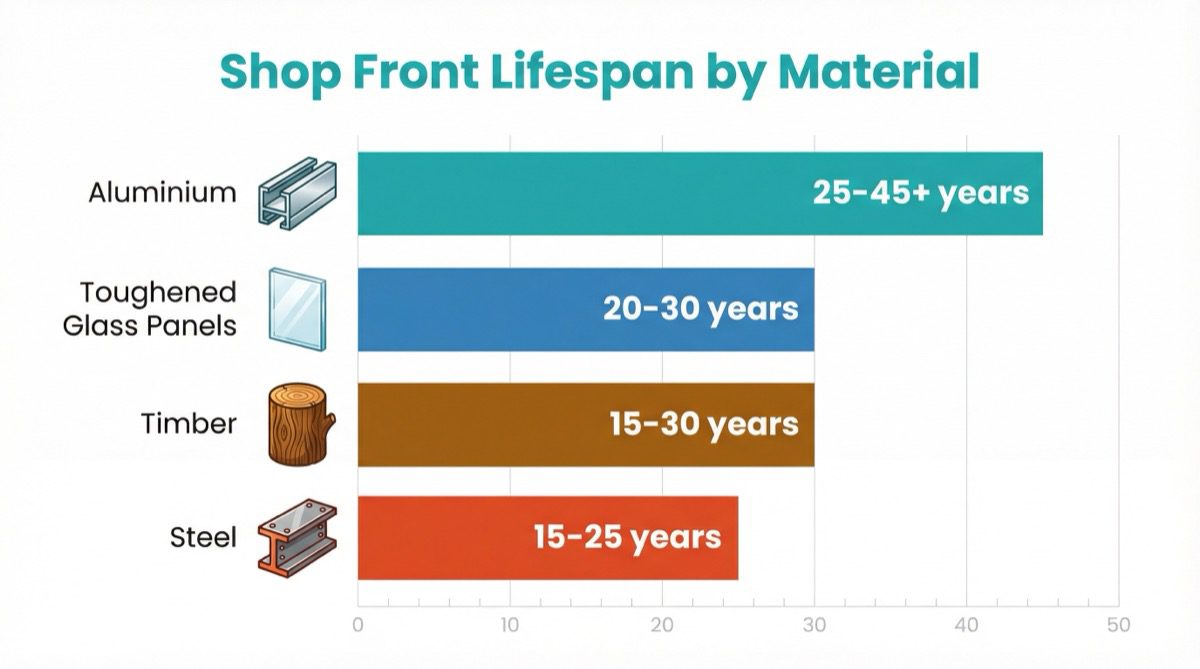
- Aluminium shop fronts last 25-45+ years with minimal upkeep, while timber lasts 15-30 years and steel just 15-25 years before replacement becomes necessary.
- The eight clearest replacement triggers are structural damage, failed seals, single glazing, security vulnerabilities, recurring repair bills, rust or rot, outdated appearance, and insurance or compliance gaps.
- If repairs cost more than 40-50% of a full replacement, or you are fixing the same problems every 2-3 years, replacement is almost always the better investment.
- Replacement costs range from around £350/m² for aluminium to £520/m² for timber — a typical single-unit shop front runs £2,500-£7,350 depending on size and material.
- Upgrading from single to double glazing cuts heat loss through your frontage by 50-70%, potentially saving hundreds of pounds a year on heating.
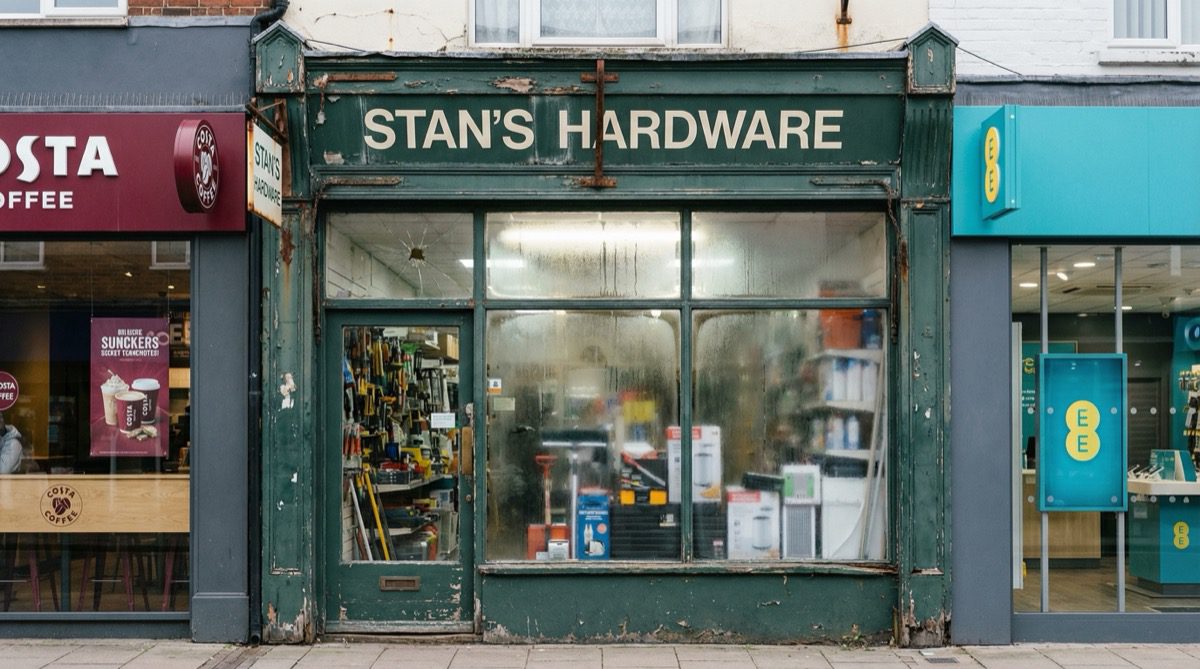
A restaurant owner in south London called us last year about a draught coming through his shop front. The timber frame had been painted over three times in a decade, but underneath the latest coat, the bottom rail was soft with wet rot. The glass seals had failed — condensation sat permanently between the panes. The door stuck every morning and swung open every afternoon as the frame expanded in the heat.
He had spent roughly £4,500 on repairs over the previous five years. The replacement — a new aluminium shop front with double-glazed panels — cost £5,200. Within the first winter, his heating bills dropped noticeably.
That is the decision this guide helps you make. Not every ageing shop front needs replacing — sometimes a targeted repair is the right call. But there are clear signals that tell you when patching things up is just delaying the inevitable.
How Long Does a Shop Front Last?
After over 20 years of installing and replacing commercial shop fronts across London and the South East, these are the lifespans we see in practice — not what manufacturers claim under ideal conditions.
Aluminium Shop Fronts: 25-45+ Years
Aluminium shop fronts are the longest-lasting option for commercial premises. The material does not rust, the powder-coated finish resists UV and weather damage, and the frames hold their shape without warping. We regularly see aluminium frontages from the 1990s that are still structurally sound. Maintenance is minimal: an annual wash and a check of the rubber gaskets.
Timber Shop Fronts: 15-30 Years
Hardwood timber shop fronts — typically Accoya, Iroko, or European oak — can last 20-30 years when properly maintained. Softwood frames rarely make it past 15-20 years. Timber demands repainting or resealing every 3-5 years. Skip a cycle and moisture gets into the grain. Once wet rot takes hold in a bottom rail or sill, it spreads fast.
Toughened Glass Panels: 20-30 Years
The glass itself does not degrade. Toughened glass panels can technically last indefinitely — though the type of glass you choose affects both longevity and performance — but the seals around double-glazed units fail after 15-25 years. Once the seal goes, you get condensation between the panes — that permanent misty look that no amount of cleaning will fix. The unit loses its insulating properties, and the only solution is replacement.
Steel and Iron Shop Fronts: 15-25 Years
Steel frames were common on UK high streets from the 1960s through the 1990s. With regular repainting every 5-7 years, a well-maintained steel shop front can reach 25 years. Without that upkeep, rust takes hold within a decade. Unlike aluminium, steel corrosion is self-perpetuating — once the coating fails, the damage accelerates.
| Material | Typical Lifespan | Maintenance Level | Key Vulnerability |
|---|---|---|---|
| Aluminium (powder coated) | 25-45+ years | Low | Seal degradation; cosmetic dating |
| Timber (hardwood) | 20-30 years | High | Wet rot, dry rot, warping |
| Timber (softwood) | 15-20 years | High | Moisture damage, shorter coating life |
| Toughened glass (sealed units) | 20-30 years | Low-Medium | Seal failure, condensation between panes |
| Steel / iron | 15-25 years | Medium-High | Rust and progressive corrosion |
8 Warning Signs Your Shop Front Needs Replacing
Age alone does not dictate replacement. A well-maintained aluminium shop front at 35 years old can be in better condition than a neglected timber one at 12. These are the eight signs we look for during a site survey.
1. Structural Damage: Cracks, Chips, or Warping
Hairline cracks in timber frames, warped mullions, chipped glass, or bent aluminium sections all point toward the end of a shop front’s useful life. A single cracked panel can be replaced individually, but if the frame itself is twisted, split, or pulling away from the masonry, localised repair will not solve the problem. Pay attention to corners and joints — that is where structural movement shows up first.
2. Condensation Between Glass Panes
Misting or water droplets between double-glazed panes means the perimeter seal has failed. Individual sealed units can sometimes be swapped without changing the frame, but if multiple panels are affected, full replacement is usually the practical answer.
3. Single Glazing and Poor Insulation
Single glazing has a U-value of around 5.8 W/m²K. Modern double glazing with Low-E coating achieves around 1.2 W/m²K — roughly five times better at retaining heat. Beyond the energy cost, under Part L of the Building Regulations, replacement glazing must meet minimum thermal standards. You cannot legally replace single glazing with more single glazing.
4. Rust, Corrosion, or Timber Rot
Surface rust on steel can be treated if caught early — our guide to shop front rust covers the thresholds. But once corrosion covers more than 25% of the frame, or pitting goes deeper than about 1 mm, treatment becomes a temporary fix. For timber, watch for soft or spongy patches, musty smells, and cuboidal cracking (rectangular blocks that indicate dry rot).
5. Doors That Stick, Jam, or Will Not Lock Properly
A door that drags on the floor, swings open when shut, or will not engage the lock usually indicates frame distortion. Sometimes hinges can be adjusted, but if the frame has moved, the door problem will keep returning. And a door that will not lock is a security liability.
6. Rising Energy Bills
If heating costs have crept up and you have ruled out other causes, your shop front may be to blame. Draughts around deteriorating frames, failed seals, and single glazing are the biggest sources of heat loss in most retail premises. Hold a lit match near the frame edges on a windy day — if the flame flickers, you have draughts costing you money.
7. Outdated Appearance Driving Customers Away
Your shop front is the first thing a potential customer sees — research shows it directly affects footfall. Sometimes a fresh coat of paint is enough — our guide to painting your shop front covers that option. But if the design itself is the problem — small windows, poor visibility, dated proportions — paint will not fix it. A redesigned shop front with larger glazed areas and a slimmer frame profile is a different proposition entirely — our guide to shop front design ideas covers what works in practice.
8. Insurance or Compliance Problems
A shop front with failed locks, cracked glass, rotten timber, or non-compliant glazing can give insurers grounds to reduce or refuse a claim. Some policies exclude glass unless specific shop front glass cover has been added. On the compliance side, glazing that does not meet Part L thermal requirements can create problems when renewing a lease or selling the property.
Should You Repair or Replace? A Decision Framework
Not every problem demands a full replacement. The cost difference between a targeted repair and a new shop front can be several thousand pounds, so getting this decision right matters.
When Repair Is Enough
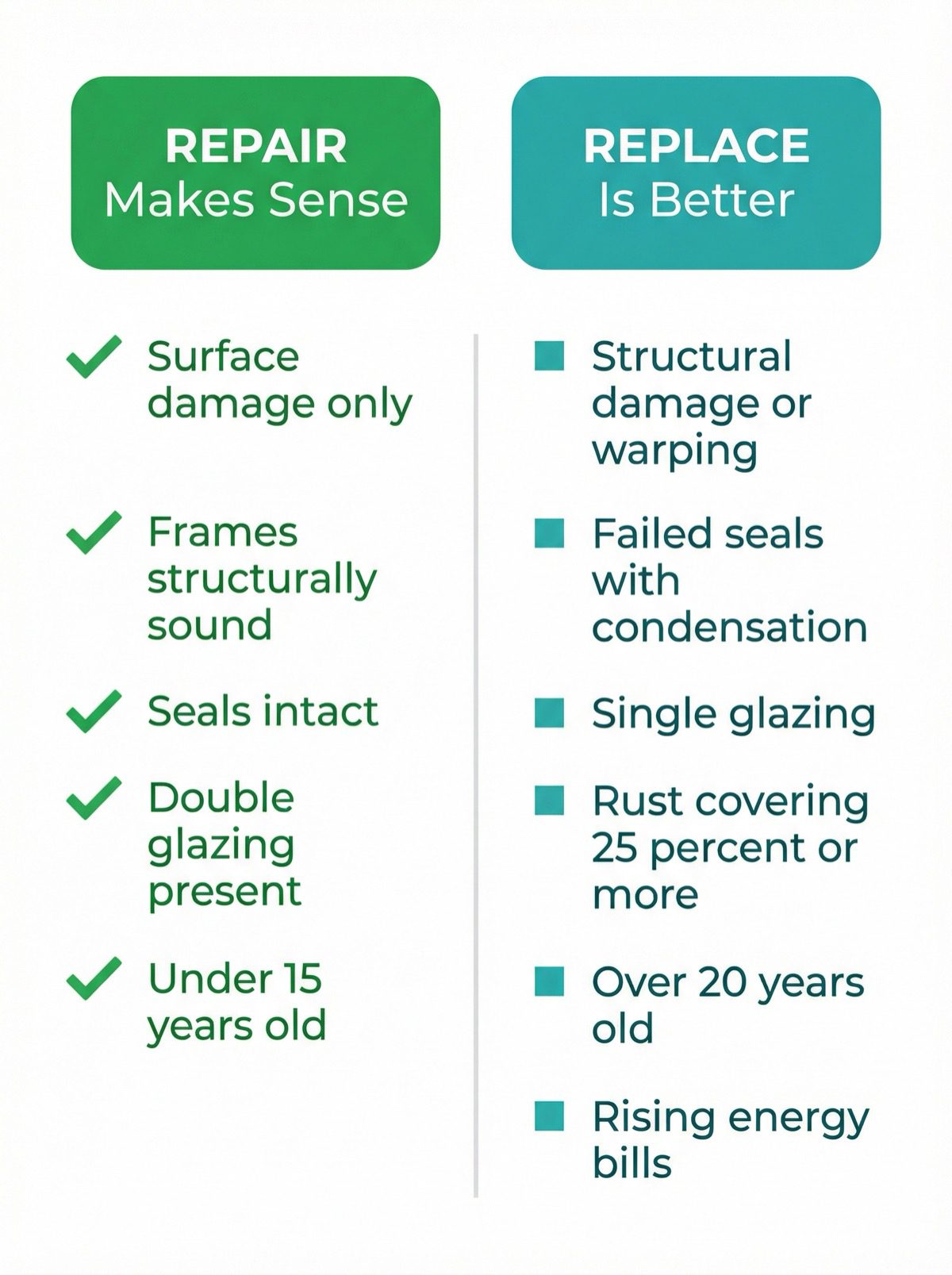
- A single cracked or chipped glass panel in an otherwise sound frame
- Worn rubber seals or gaskets that can be replaced without disturbing the frame
- Surface rust covering less than 10-15% of the frontage
- Localised timber rot in a single section where the rest of the frame is solid
- Cosmetic issues where repainting or spraying can restore the finish
- Total repair cost is well under 40% of full replacement cost
When Replacement Is the Better Investment
- Repair costs exceed 40-50% of a full replacement
- You are repairing the same issues every 2-3 years
- The frame is structurally compromised — twisted, corroded through, or extensively rotten
- Multiple double-glazed units have failed, or you are still on single glazing
- Rust or corrosion covers more than 25% of a steel frame
- Security has been compromised and the frame cannot accept modern locking hardware — consider upgrading to laminated glass or adding electric roller shutters as part of the replacement
- The shop front does not meet current Part L thermal performance standards
- You have spent more than £2,000 on repairs in the last three years with problems still recurring
The 40% rule is a useful benchmark. If a single repair costs more than 40% of what a new shop front would cost, the repair rarely makes financial sense — especially when you factor in the improved energy efficiency, security, and 25-45 year lifespan of a modern aluminium system.
What Does a Shop Front Replacement Cost?
Costs vary by material, size, specification, and location. For a full breakdown, see our shop front cost guide, or use the cost calculator for an instant estimate based on your dimensions.
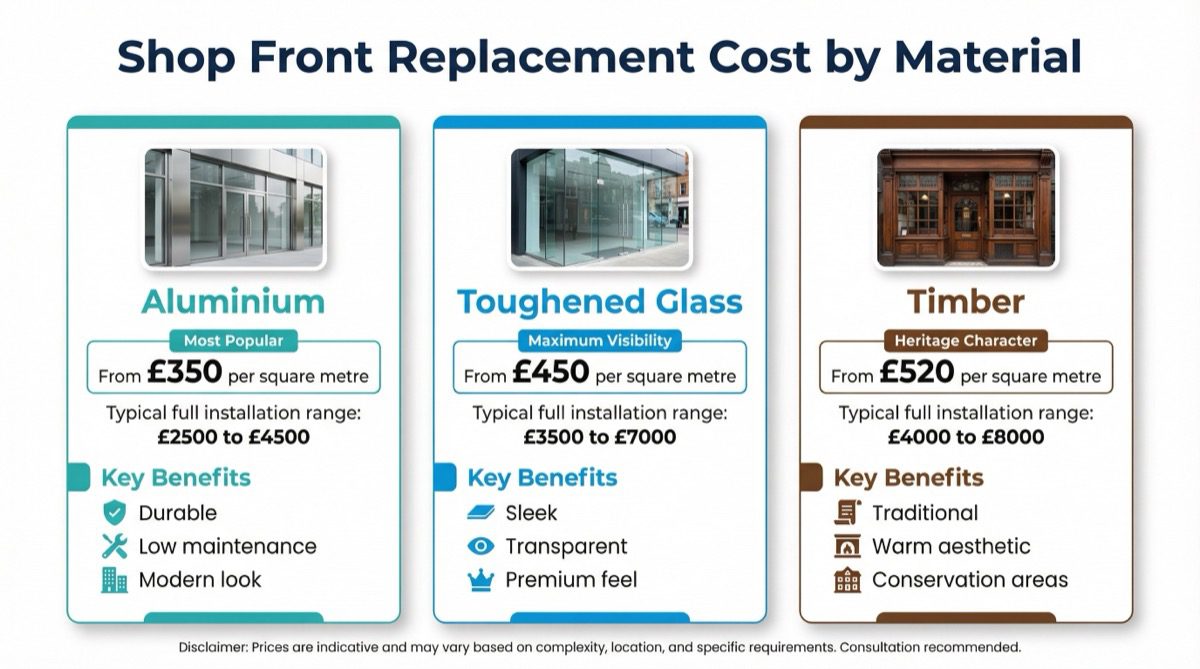
| Material | Cost per m² | Small (~7.5 m²) | Medium (~12 m²) | Large (~21 m²) |
|---|---|---|---|---|
| Aluminium | £350 | £2,625 | £4,200 | £7,350 |
| Toughened glass | £450 | £3,375 | £5,400 | £9,450 |
| Timber | £520 | £3,900 | £6,240 | £10,920 |
Overall typical range: £2,500-£7,350 for most commercial installations. London projects tend to run higher — £1,900-£12,700+ depending on size, materials, and specification.
Additional costs may include making good to surrounding brickwork (£200-£800), planning application fees (£258), signage and branding, and roller shutters (£800-£2,500). Part L compliance is usually self-certified by a FENSA-registered installer at no extra cost.
Energy Efficiency: Why Modern Shop Fronts Pay for Themselves
Upgrading from single glazing to modern double glazing with a Low-E coating can reduce heat loss through the glazed areas by 50-70%. Argon gas fills between the panes cut heat transfer by a further 30% compared to air-filled units. For a retail unit with a large glass frontage, that translates into savings of hundreds of pounds per year on heating.
Part L of the Building Regulations requires any replacement glazing in a non-domestic building to meet minimum thermal performance standards. A FENSA-registered installer — such as Huxley & Co — self-certifies compliance, so you do not need a separate building control application. Replacing old single-glazed frontages also brings the building closer to EPC requirements, increasingly relevant under Minimum Energy Efficiency Standards (MEES) regulations for commercial leases.
Planning Permission and Building Regulations
Like-for-like replacement — same materials, same design, same dimensions — generally falls under permitted development and does not require a planning application.
If the replacement involves a material change to the external appearance (changing from timber to aluminium, altering glazed areas, modifying the fascia), you will need full planning permission. The fee for a standard commercial application in England is £258.
If your premises is in a conservation area, permitted development rights may be restricted — even minor changes may need an application. For listed buildings, any exterior alteration requires listed building consent. Replacing a shop front on a listed building without consent is a criminal offence.
Tip: If unsure, apply for a Lawful Development Certificate (£129) from your local planning authority for a definitive answer.
The Huxley Replacement Process
A full shop front replacement typically takes 2-4 weeks from first contact to completion.
Week 1 — Survey and consultation. We visit the site, take measurements, assess the existing structure, and discuss materials, finish, glazing, hardware, budget, and any additions such as integrated lighting or a canopy.
Week 1-2 — Design and specification. We produce detailed drawings and a fixed-price quotation.
Weeks 2-3 — Manufacture. Your shop front is fabricated to exact specifications. Aluminium sections are powder coated to your chosen RAL colour, glass is cut and sealed, and all hardware is prepared.
Week 3-4 — Installation. On-site fitting takes 1-3 days. We remove the old shop front, install the new system, make good to surrounding surfaces, and self-certify Part L compliance as a FENSA-registered installer.
Frequently Asked Questions
How much does it cost to replace a shop front in the UK?
For a standard single-unit commercial shop front, expect £2,500-£7,350 depending on size and material. Aluminium costs around £350/m², toughened glass approximately £450/m², and timber around £520/m². Our cost guide has a full breakdown, and the cost calculator gives instant estimates.
Can I just replace the glass rather than the whole shop front?
Yes, if the frame is structurally sound. Individual toughened glass panels or failed sealed units can be replaced without disturbing the frame. If multiple panels have failed or the frame has deteriorated, full replacement is usually more cost-effective.
Do I need planning permission to replace my shop front?
For a like-for-like replacement, you generally do not. If you are changing the material, altering glazed areas, or modifying the overall appearance, you will need to apply. Conservation areas have stricter rules, and listed buildings always require listed building consent.
Will a new shop front reduce my energy bills?
Upgrading from single to double glazing with Low-E coating reduces heat loss through glazed areas by 50-70%. For a medium retail unit, that can mean savings of hundreds of pounds per year. Modern frames also eliminate draughts that account for much of the heat loss in older installations.
Can I paint my shop front instead of replacing it?
If the frame is structurally sound and your only issue is cosmetic, repainting can work well — our shop front painting guide covers the process. But paint will not fix structural problems, failed seals, rot, advanced corrosion, or poor thermal performance.
How long does shop front replacement take?
From consultation to completed installation, typically 2-4 weeks. On-site installation takes 1-3 days. Listed buildings or conservation area projects may take longer if planning applications are involved.
What is the best material for a new shop front?
For most commercial applications, aluminium offers the best balance of durability, low maintenance, and cost. Timber suits heritage buildings and conservation areas. Frameless glass works for modern retail and hospitality businesses wanting maximum visibility.
Does a new shop front increase property value?
A modern shop front improves kerb appeal, thermal performance, and compliance status — all contributing to rental and resale value. If you are opening a new shop, factoring in the frontage from day one avoids costly retrofits later. For landlords, it can justify higher rents and attract better tenants. For owner-occupiers, reduced energy and maintenance costs deliver ongoing returns.
Who is responsible for replacing a shop front — landlord or tenant?
Under a Full Repairing and Insuring (FRI) lease, the tenant is typically responsible. Some leases split responsibility between structure (landlord) and glazing/hardware (tenant). Check your specific lease terms before committing to works.
Does my insurance cover shop front replacement?
Standard commercial policies often exclude shop front glass — you need specific glass cover added. If renting, your landlord’s building insurance may not cover the shop front at all. A deteriorating frontage can also give insurers grounds to dispute claims, so keeping it maintained protects your cover.
Make the Right Decision for Your Business
A targeted repair on a structurally sound frame can buy you years of additional life at a fraction of replacement cost. But when the warning signs stack up — recurring repairs, failed seals, rising energy bills, or a frontage that no longer represents your business — putting it off typically costs more in the long run.
Huxley & Co offers free, no-obligation site surveys across London and the South East. If you are unsure where to start, our guide on how to choose a shop front installer covers what to look for. We will tell you honestly whether repair or replacement is the smarter investment — and give you a fixed-price quote so you know exactly what you are committing to.
Call 020 7112 4849 or email info@huxleyandco.co.uk to book your free survey. You can also get in touch through our website or try the shop front cost calculator for an instant estimate.