
Key Takeaways:
- Double glazing achieves U-values of 1.1–1.4 W/m²K versus 5.0–5.8 for single glazing — a 75–80% improvement in thermal performance.
- UK Building Regulations Part L (June 2022) require a maximum U-value of 1.6 W/m²K for new commercial glazing, making single glazing non-compliant for new installations.
- Double glazing costs £400–£700 per m² compared to £200–£400 for single, but energy savings of up to 74% on window heat loss offset the difference within a few years.
- Laminated double glazing holds together when struck, preventing smash-and-grab entry — single toughened glass shatters completely, leaving no barrier.
- Single glazing is still acceptable for like-for-like repairs in existing frames, listed buildings, and indoor shopping centre units where Building Regulations exemptions apply.
A retailer on a busy south London high street called us last winter with a problem that was costing him money every single day. His shop front had single-glazed panels installed in the early 2000s, and by mid-November the condensation was so bad that passers-by could not see his window displays until well past midday — exactly the kind of issue that kills footfall. His heating bills were running over £400 a month, and his landlord had flagged that the building’s EPC rating would need improving before the lease renewal.
The question he asked us is one we hear at least twice a week: should I go with double glazing or stick with single glazing for the shop front?
For most commercial premises in 2026, the answer is straightforward. But “most” is not “all,” and the detail matters. This guide breaks down U-values, costs, noise reduction, UK Building Regulations, security, condensation, and the specific scenarios where single glazing might still make sense — all from the perspective of an installer that has been fitting commercial glazing across the UK for over 20 years.
What Is the Difference Between Single and Double Glazing?
Before we compare performance, it helps to understand what you are actually paying for with each option.
How Single Glazing Works
Single glazing is exactly what it sounds like — one pane of glass fitted into a frame. For commercial shop fronts, that pane is typically 6mm or 10mm toughened glass — our guide to what glass is best for shop fronts covers the full range of options. It lets in natural light and provides a physical barrier against the weather, but that is about where its benefits end.
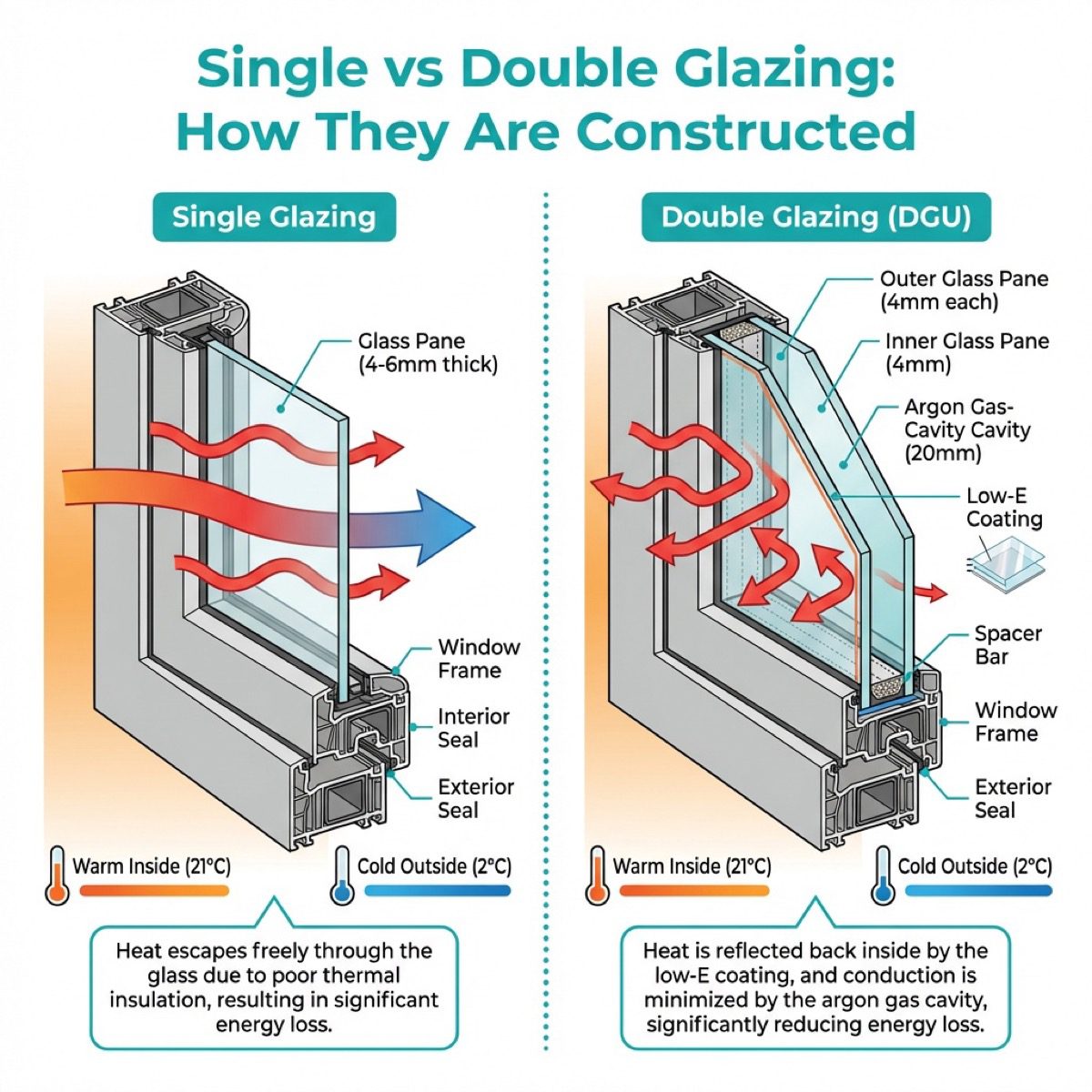
A single pane of glass has a U-value of around 5.0–5.8 W/m²K. In practical terms, that means heat passes through it almost as freely as it would through an open window with a slight breeze. During winter, the inner surface of a single-glazed shop front sits close to the outside temperature, which is why condensation, cold draughts, and high heating bills are almost guaranteed.
How Double Glazing Works
A double glazed unit (DGU) consists of two panes of glass separated by a sealed cavity, typically filled with argon gas. The standard UK specification for a commercial DGU is 4mm glass / 20mm argon-filled cavity / 4mm low-E glass, giving a total thickness of 28mm. Shop front DGUs often use 6mm glass on both sides, pushing the total to 28–32mm.
Three things work together to reduce heat transfer:
- The sealed air gap — trapped gas is a poor conductor of heat, creating an insulating barrier between inside and outside.
- Argon gas filling — argon is denser than air, which slows convection currents within the cavity and reduces heat transfer further.
- Low-E coating — a microscopically thin metallic oxide layer on the inner pane reflects radiant heat back into the building while still allowing natural light through.
Together, argon and low-E deliver over 30% better thermal performance than a basic air-filled DGU without coatings. A modern argon-filled, low-E double glazed unit achieves a U-value of 1.1–1.4 W/m²K — roughly four to five times better than single glazing.
Single vs Double Glazing for Shop Fronts — Head-to-Head Comparison
Here is how the two options stack up across every metric that matters for a commercial shop front.
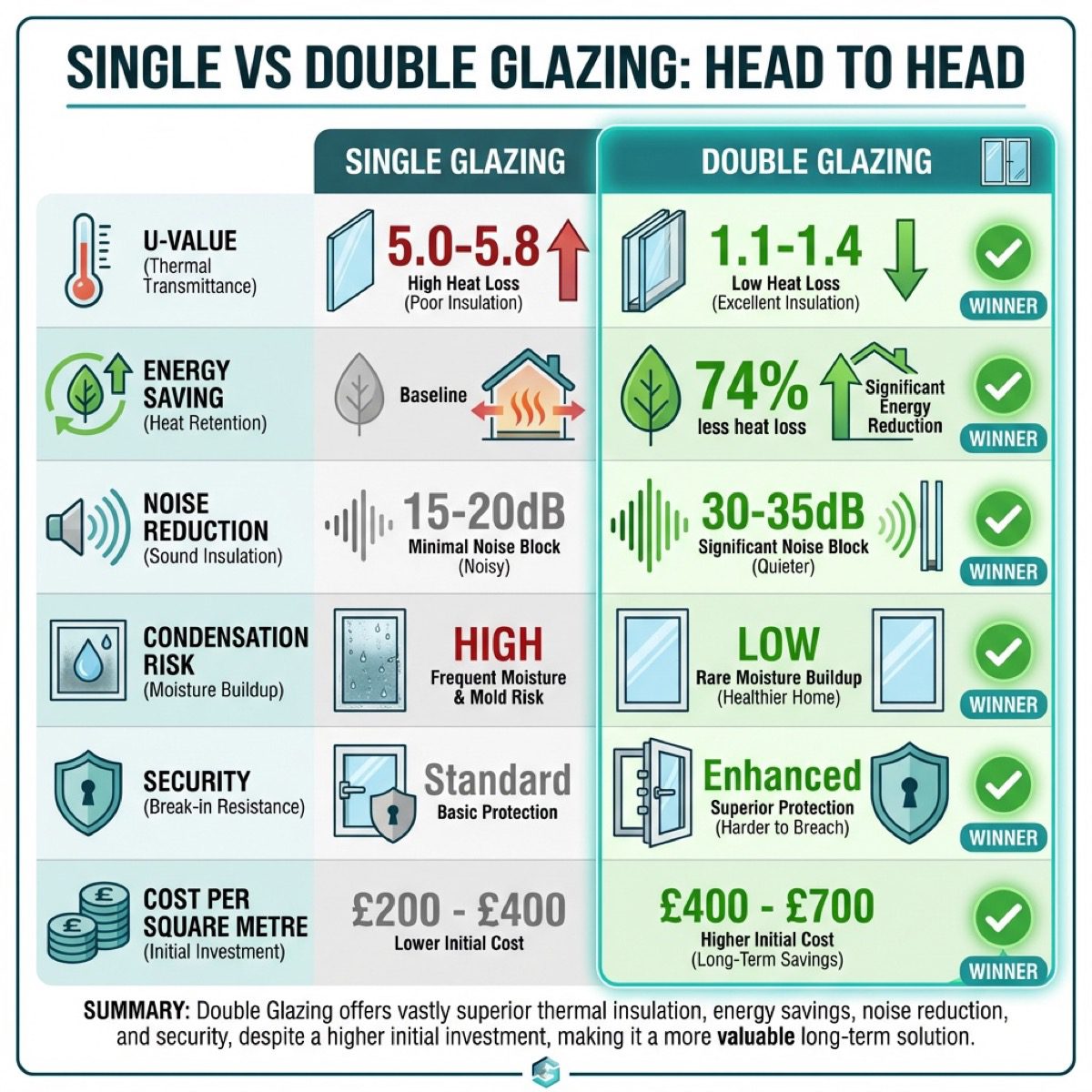
| Metric | Single Glazing | Double Glazing (Argon + Low-E) |
|---|---|---|
| U-Value (W/m²K) | 5.0 – 5.8 | 1.1 – 1.4 |
| Noise Reduction | 15 – 20 dB | 30 – 35 dB |
| Energy Savings | Baseline | Up to 74% reduction in window heat loss |
| Condensation Risk | High — inner pane close to outside temperature | Low — inner pane stays close to room temperature |
| Security | Toughened glass shatters completely on impact | Laminated option holds together, resisting forced entry |
| Part L Compliant (2022+) | No — fails by a wide margin | Yes — comfortably meets 1.6 W/m²K requirement |
| Cost per m² | £200 – £400 | £400 – £700 |
| Lifespan | 15 – 20 years | 20 – 25 years (sealed unit warranty typically 10 years) |
Every category except upfront cost favours double glazing. And as we will see in the Building Regulations section below, the cost argument has largely been settled by legislation.
Thermal Performance and Energy Savings
U-Values Explained
U-value measures how quickly heat passes through a material. The lower the number, the better the insulation. Think of it like a golf score — lower is better.
Single glazing at 5.0–5.8 W/m²K is one of the worst-performing building elements you can have. For context, an uninsulated cavity wall achieves around 1.5 W/m²K. Your single-glazed shop front is literally losing heat three to four times faster than a bare brick wall.
Modern double glazing at 1.1–1.4 W/m²K brings window performance in line with (or better than) many insulated wall systems. If you want to push performance further, triple glazing achieves 0.6–0.8 W/m²K, though for most shop fronts the additional cost and thickness are hard to justify.
How Much Can Double Glazing Save Your Business?
According to the Energy Saving Trust, upgrading from single to A-rated double glazing reduces window heat loss by approximately 74%. For a typical semi-detached property, that translates to around £140 per year in energy savings and a CO&sub2; reduction of 380 kg annually.
Commercial premises with large glazed areas — and shop fronts are almost entirely glass — see proportionally bigger savings. A medium-sized retail unit with 15–20 m² of shop front glazing can realistically save several hundred pounds per year on heating alone. Over the 20–25 year lifespan of a DGU, those savings add up to thousands.
Factor in rising energy prices and the trajectory is clear: the payback period on the additional cost of double glazing gets shorter every year.
UK Building Regulations for Shop Front Glazing
This is the section that changes the conversation from “which is better?” to “you may not have a choice.”
Part L Requirements for Non-Domestic Buildings
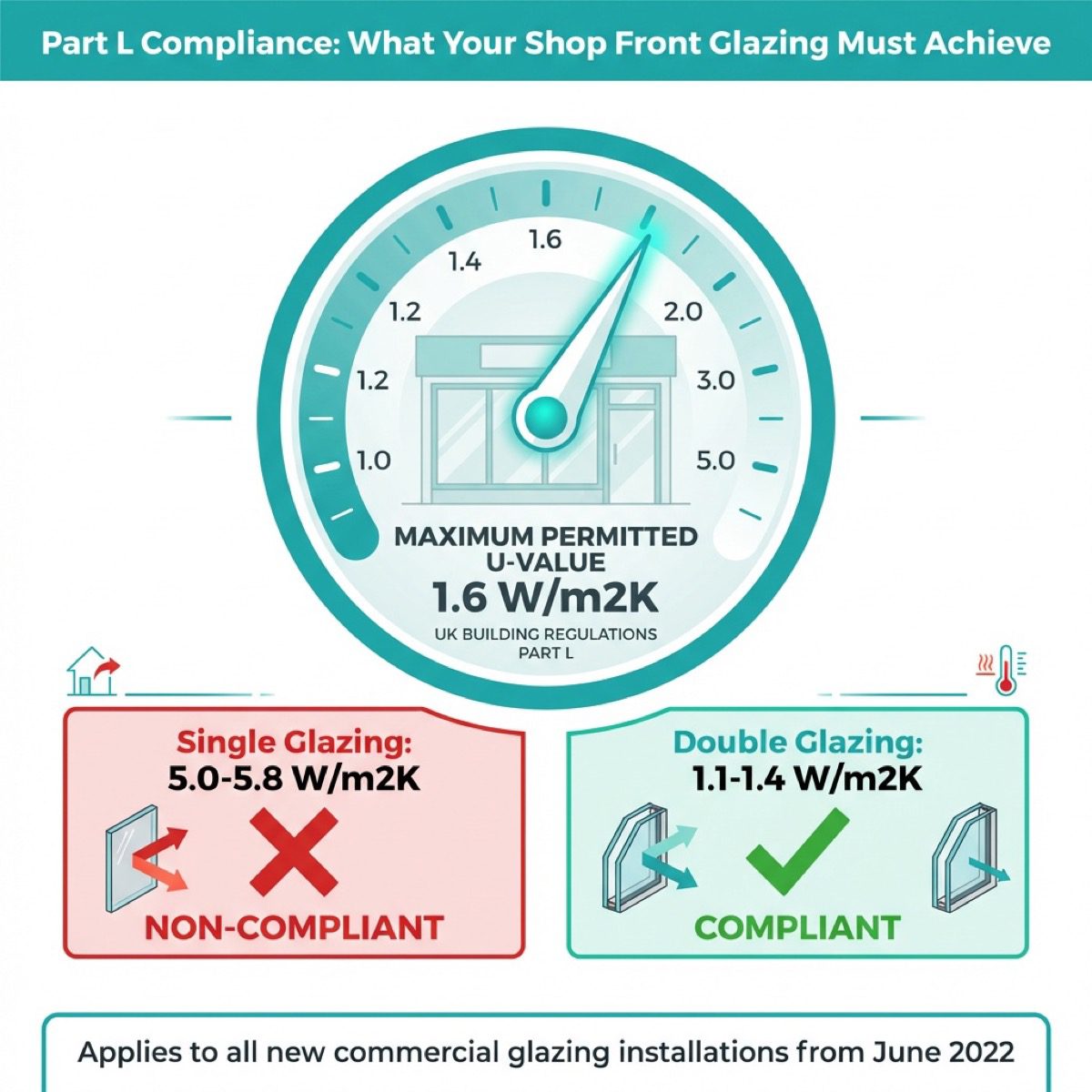
Approved Document L, Volume 2 (2021 edition, in force since 15 June 2022) sets the energy performance standards for non-domestic buildings in England. The maximum U-value for windows in new commercial buildings and replacement glazing is 1.6 W/m²K, tightened from 2.2 W/m²K under the previous 2010 regulations.
Single glazing at 5.0–5.8 W/m²K fails this requirement by a factor of three. There is no workaround, no trade-off calculation, and no exemption for cost. If you are installing new glazing or replacing existing glazing in a commercial property, the glass must meet the 1.6 W/m²K limit.
This means that for any new aluminium shop front installation or full glazing replacement, single glazing is effectively non-compliant. The building control body inspecting the work will not sign it off.
EPC Ratings and Commercial Lease Implications
Beyond Part L, there is a commercial incentive too. Since April 2023, commercial landlords in England and Wales need a minimum Energy Performance Certificate (EPC) rating of E to grant new leases. Poor glazing drags down an EPC rating, potentially restricting a landlord’s ability to let the property.
If you are a tenant negotiating a lease, your landlord may require upgraded glazing as a condition of the letting. If you are a freeholder, investing in double-glazed commercial glazing protects both your energy costs and your rental income.
The government has signalled further tightening under the Future Homes and Buildings Standard, with additional energy performance requirements expected between 2025 and 2028. Getting ahead of these changes now avoids expensive retrofit work later.
Noise Reduction for High Street Shop Fronts
How Much Noise Does Double Glazing Block?
A busy UK high street generates around 70–80 dB of traffic and pedestrian noise. Single glazing reduces that by roughly 15–20 dB, leaving your interior at 50–65 dB — about the level of a loud conversation. That is uncomfortable for staff and distracting for customers.
Standard double glazing reduces noise by 30–35 dB, bringing the same high street down to a comfortable 35–50 dB interior. For most retail and hospitality environments, that is the difference between a space where people want to linger and one they want to leave.
Acoustic Glazing for Busy Locations
If your premises sits on a particularly loud road — near a junction, bus route, or construction site — acoustic double glazing using laminated glass can push noise reduction to 35–40 dB. Specialist acoustic units with asymmetric pane thicknesses and wider cavities achieve up to 45–52 dB reduction.
We find that restaurants, salons, and professional services offices benefit most from acoustic upgrades, where background noise directly affects the customer experience.
Security: Laminated Double Glazing vs Single Toughened Glass
Security is one of the most misunderstood aspects of shop front glazing. Many business owners assume that toughened glass shop fronts are the most secure option because toughened (tempered) glass is physically harder to break. That is only half the story.
Why Laminated Glass Resists Break-Ins
Toughened glass is four to five times stronger than standard annealed glass, which makes it harder to shatter in the first place. But when it does break, it disintegrates entirely into small granular pieces — and leaves an open hole. An intruder who manages to break a toughened single-glazed panel can walk straight through.
Laminated glass, by contrast, has a polyvinyl butyral (PVB) interlayer sandwiched between the panes. When struck, the glass cracks but the PVB holds the fragments in place. The pane stays in the frame, and the intruder has to physically push through a resistant, flexible membrane — which takes time, makes noise, and is often enough to deter the attempt entirely.
A double glazed unit with a laminated inner pane gives you the best of both worlds: the thermal performance of a sealed DGU and the security of a laminated glass barrier.
Insurance and Security Requirements
Commercial insurance policies for ground-floor retail premises increasingly specify laminated glazing as a condition of cover. If your shop front uses single toughened glass and you suffer a break-in, your insurer may dispute the claim on the basis that the glazing did not meet reasonable security standards. It is worth checking your policy wording before making a glazing decision — especially for vacant or unoccupied properties where security risks are highest.
Condensation Problems with Single Glazed Shop Fronts
If you run a retail business, condensation is not just a nuisance — it is a direct hit to your sales.

Why Condensation Forms on Single Glazing
Condensation forms when warm, moist interior air meets a surface that is below its dew point. With single glazing, the inner surface of the glass sits close to the outside temperature. On a cold morning, that surface can easily drop below 10°C while the shop interior is heated to 18–21°C. The result is water streaming down your shop window from opening time until the glass warms up — which can take hours.
For retailers, that means your window displays are invisible to passers-by during the most valuable morning trading hours — undermining any investment you have made in shop front lighting and visual merchandising. For restaurants and cafes, it means diners staring at a wall of dripping glass instead of the street outside.
How Double Glazing Prevents Display Damage
Double glazing keeps the inner pane close to room temperature because the sealed cavity insulates it from the cold outer pane. Condensation on the room-facing surface becomes rare, and your displays stay visible all day.
Interestingly, you may occasionally see condensation on the outside of double-glazed panels on still, humid mornings. This is actually a sign that the unit is working well — the outer pane is cold because very little heat is escaping through the DGU. It clears quickly once the sun hits the glass or a breeze picks up, and the Energy Saving Trust confirms it is nothing to worry about.
Persistent condensation between the panes of a double glazed unit, however, means the seal has failed and the unit needs replacing — one of the key signs covered in our guide on when to replace your shop front. This is covered under most sealed unit warranties for 10 years.
Cost Comparison: Single vs Double Glazing for Shop Fronts
Price Per Square Metre
Here is a realistic breakdown of what you can expect to pay for shop front glazing in the UK in 2026:
| Glazing Type | Cost per m² (Supply) | Notes |
|---|---|---|
| Single glazed (6–10mm toughened) | £200 – £400 | Non-compliant for new installations under Part L |
| Double glazed (argon + low-E) | £400 – £700 | Standard specification for new commercial shop fronts |
| Specialist / frameless glazing | £1,000+ | Structural glass, large-format panels, bespoke applications |
Installation adds £1,000–£3,000 depending on the size and complexity of the project. Full shop front costs — including frames, doors, and ironmongery — are covered in our detailed pricing guide.
Long-Term Return on Investment
Yes, double glazing costs 40–75% more per square metre upfront. But consider what you get for that additional spend:
- Energy savings — up to 74% reduction in heat loss through the glazing, saving hundreds of pounds annually on a medium-sized retail unit.
- Regulatory compliance — you avoid the risk of failing a building control inspection, which would mean removing and replacing non-compliant glazing at your own expense.
- Lower insurance premiums — laminated double glazing may qualify you for reduced premiums due to improved security.
- Longer lifespan — 20–25 years versus 15–20 for single glazing, meaning fewer replacements over the life of the building.
- Better EPC rating — protecting rental value and future lease negotiations.
When you factor all of this in, the question is not whether you can afford double glazing. It is whether you can afford not to install it.
When Single Glazing Might Still Be Acceptable
We would not be giving you honest advice if we said double glazing is the right answer in every situation. There are specific cases where single glazing is still a reasonable choice.
Like-for-Like Repairs in Existing Frames
If you are replacing a broken pane in an existing single-glazed frame and the frame cannot accommodate a thicker DGU, Building Regulations allow a like-for-like replacement in some circumstances. This typically applies to older timber or steel frames where the rebate depth is too shallow for a sealed unit — though if the steel frame is showing signs of rust or corrosion, a full replacement with a modern system is usually the better path. However, building control may still push for improved performance where reasonably practicable.
Listed Buildings and Conservation Areas
Properties with listed building status or those in designated conservation areas may have restrictions on altering the external appearance — our guide on planning permission for commercial glazing covers when consent is needed. If the existing shop front has heritage value, the local planning authority may require you to retain single glazing to preserve the building’s character. In these cases, secondary glazing (an additional pane fitted behind the existing glass) can improve thermal performance without altering the external appearance.
Indoor Shopping Centre Units
Shop units inside a covered shopping centre or mall are not exposed to external weather conditions. The ambient temperature on both sides of the glass is controlled, so the thermal argument for double glazing is much weaker. Single toughened glass is standard for internal retail units and is generally compliant because the glazing is not part of the building’s thermal envelope.
Temporary Fit-Outs
Pop-up shops, temporary exhibitions, or short-term lets (under 12 months) may not justify the additional cost of double glazing, especially if the glazing will be removed at the end of the tenancy. Even here, you need to check whether building control approval is required for the installation.
Standard UK Double Glazed Unit Specification
If you are specifying or approving glazing for a shop front project, here is what a standard commercial DGU looks like:
- Outer pane: 4–6mm toughened glass (clear or body-tinted)
- Cavity: 16–20mm argon gas filled
- Inner pane: 4–6mm toughened low-E glass (soft-coat for best performance)
- Total thickness: 24–32mm
- Spacer bar: Warm-edge spacer (reduces heat loss at the edge of the unit)
- U-value: 1.1–1.4 W/m²K
For ground-floor toughened glass shop fronts in high-risk locations, we recommend specifying a laminated inner pane (6.4mm or 6.8mm laminated) for the security benefits discussed earlier. This adds marginally to the cost and thickness but significantly improves break-in resistance.
The DGU sits within an aluminium shop front frame system designed to accommodate sealed units of this thickness. Modern commercial framing systems from manufacturers like Kawneer, SAPA, and Smart Systems are engineered specifically for DGUs and include thermal break technology in the frame itself, preventing the frame from becoming a cold bridge. For larger commercial buildings, aluminium curtain wall systems use the same double-glazed units within a full-height facade. For inspiration on how glazing choices fit into a broader shop front project, see our guide to shop front design ideas.
Which Glazing Is Right for Your Shop Front?
If your project involves any of the following, double glazing is not just recommended — it is required or strongly advisable:
- A new shop front installation (Part L compliance)
- Full glazing replacement in an existing frame (Part L compliance)
- A street-facing retail unit where window displays matter
- A premises on a busy or noisy road
- A building where improving the EPC rating is a priority
- A ground-floor unit where security is a concern — pairing double glazing with electric roller shutters provides an additional layer of overnight protection
Single glazing remains viable only in narrowly defined situations: like-for-like repairs where the frame cannot take a DGU, listed buildings with planning restrictions, indoor mall units, or genuinely temporary fit-outs.
For the vast majority of commercial shop fronts in the UK in 2026, double glazing is the standard specification. Not the premium option — the baseline.
Frequently Asked Questions
Is double glazing better than single glazing for a shop front?
In nearly every measurable way, yes. Double glazing delivers 75–80% better thermal performance, roughly double the noise reduction, dramatically less condensation, and better security when laminated panes are used. It is also the only option that meets current UK Building Regulations for new installations.
Do shop fronts need to be double glazed by law?
For new installations and full replacements, yes. Approved Document L (Volume 2, in force since June 2022) requires commercial glazing to achieve a U-value of 1.6 W/m²K or better. Single glazing at 5.0–5.8 W/m²K cannot meet this requirement. Exemptions exist for like-for-like repairs, listed buildings, and certain temporary works.
What U-value does commercial glazing need to achieve in the UK?
The current maximum U-value for windows in non-domestic buildings under Part L (2022) is 1.6 W/m²K. Modern double glazing with argon gas and a low-E coating achieves 1.1–1.4 W/m²K, meeting this requirement comfortably. The previous limit was 2.2 W/m²K under the 2010 regulations.
How much does double glazing cost for a shop front?
Double glazed panels for a commercial shop front typically cost £400–£700 per m² for supply, with installation adding £1,000–£3,000 depending on the project. A complete double-glazed shop front installation including frames, doors, and ironmongery varies widely based on size and specification.
Does single glazing cause condensation on shop fronts?
Yes, and it is one of the most common complaints we hear. The inner surface of single glazing drops close to the outside temperature, causing warm interior air to condense on the glass. This obscures window displays, creates a poor impression, and can even damage stock displayed near the window.
Does double glazing improve shop front security?
Standard double glazing offers modest security improvements simply because there are two panes to break through. However, specifying a laminated inner pane transforms the security profile. Laminated glass holds together when struck thanks to its PVB interlayer, preventing smash-and-grab entry even after the glass has cracked.
Can you retrofit double glazing to an existing shop front?
It depends on the frame. Modern aluminium shop front systems are designed to accept DGUs of 24–32mm thickness. Older frames with shallow rebates may not accommodate a sealed unit, in which case the frame needs replacing alongside the glass — though if the frame is in reasonable condition, repainting and secondary glazing may be an alternative worth considering. We assess this during a site survey and can advise on the most cost-effective approach.
Is triple glazing worth it for a shop front?
Triple glazing achieves U-values of 0.6–0.8 W/m²K and even better noise reduction than standard double glazing. However, for most commercial shop fronts the additional cost, weight, and thickness are difficult to justify. Double glazing already meets Part L requirements comfortably, and the marginal gains from triple glazing rarely deliver a reasonable payback period in a commercial setting.
What is low-E glass and do shop fronts need it?
Low-E (low emissivity) glass has a microscopically thin metallic oxide coating that reflects radiant heat back into the building while allowing visible light through. In a double glazed unit, low-E coating on the inner pane is what brings the U-value down from around 2.8 W/m²K (air-filled, no coating) to 1.1–1.4 W/m²K. It is a standard part of any modern DGU specification and is needed to meet Part L requirements.
How long does double glazing last on a shop front?
A well-manufactured double glazed unit in a commercial setting typically lasts 20–25 years. The sealed unit itself usually carries a 10-year warranty against seal failure (which causes misting between the panes). The aluminium frame around it can last 30 years or more with minimal maintenance. Single glazing lasts 15–20 years before the frame and fittings typically need replacing.
Get Expert Advice on Your Shop Front Glazing
Choosing between single and double glazing for your shop front comes down to a straightforward set of factors: regulatory compliance, thermal performance, security, noise, and long-term cost. For the vast majority of UK commercial premises, double glazing is the clear winner on every count.
At Huxley & Co, we are FENSA registered, CHAS accredited, and Constructionline approved, with over 20 years of experience installing commercial glazing, aluminium shop fronts, and toughened glass shop fronts across the UK. We can survey your premises, recommend the right glazing specification, and handle the full installation including building control sign-off. If you are comparing installers, our guide on how to choose a shop front installer covers the key questions to ask.
Call us on 020 7112 4849, email info@huxleyandco.co.uk, or get in touch through our website for a free, no-obligation consultation.