
Key Takeaways:
- Opening a coffee shop in the UK costs between £7,500 for a basic kiosk and £250,000+ for a premium sit-down cafe, with most independents spending £50,000-£100,000.
- Equipment alone accounts for £15,000-£50,000 of your budget, with the espresso machine (£3,000-£15,000) being the single largest equipment purchase.
- The average UK cafe generates £788,400 in annual revenue with net profit margins of 10-20%, though most new shops take 12-18 months to break even.
- Your shop front is your biggest marketing asset — glass fronts, bifold doors (£2,500-£5,000), and branded canopies (£1,000-£5,000) directly drive footfall and impulse visits.
- Use Class E changes mean converting a retail unit to a cafe may not need planning permission, but new frontage, signage, and pavement seating all require separate approvals.
Walk down any thriving high street and count the coffee shops. Then count the ones that are actually busy. The difference almost always comes down to the same thing: the busy ones look inviting from the outside, and the quiet ones do not.
The UK coffee shop market is now worth an estimated £6.7 billion and growing at 7% year on year. That growth draws new entrants constantly — which means competition for every cup sold is fiercer than ever. Getting your startup costs right from day one is not just about surviving the first year. It is about building a business that can compete for the long haul against both the chains and the ever-growing number of independents.
This guide breaks down every cost you will face when opening a coffee shop in the UK in 2026, from lease deposits and espresso machines through to a topic that almost no other guide covers: designing a shop front that actually brings customers through the door. Because the best coffee in the world means nothing if nobody walks in.
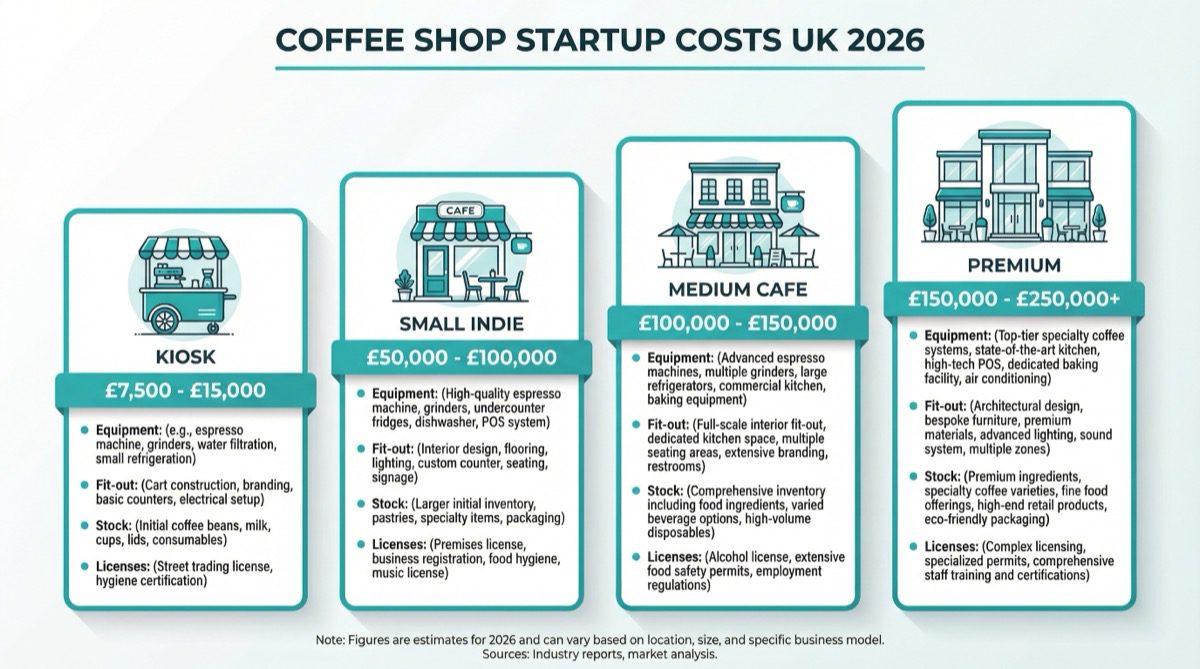
Coffee Shop Startup Costs at a Glance
Before diving into the detail, here is the broad picture. How much you need depends entirely on what kind of coffee business you want to run.
| Business Model | Startup Cost Range | Notes |
|---|---|---|
| Coffee cart or kiosk | £7,500 – £30,000 | Lowest barrier to entry; mobile or fixed-pitch options |
| Small takeaway cafe | £20,000 – £60,000 | Limited or no seating; lower rent, simpler fit-out |
| Standard sit-down cafe | £50,000 – £150,000 | Most common model; seating for 20-40 covers |
| Premium or speciality cafe | £100,000 – £250,000+ | High-end fit-out, prime location, full kitchen |
The range is enormous, and that is because a converted shipping container serving flat whites from a car park and a bespoke speciality cafe on a London high street are fundamentally different businesses. Most independents opening their first sit-down cafe in 2026 should plan for somewhere between £50,000 and £100,000 all in.
Let us break that figure down category by category.
Premises Costs: Rent, Deposits, and Location
Your premises will likely be the largest ongoing cost and one of the biggest upfront commitments. Most commercial landlords require a deposit of three to six months’ rent, plus the first month in advance. For a small cafe unit outside London, that might mean £3,000 to £6,000. For a prime city-centre location, expect £15,000 to £30,000 or more before you have spent a penny on fit-out.
Monthly rent varies dramatically across the UK. Regional towns and suburbs run £500 to £1,500 per month. City centres outside London sit between £1,500 and £3,500. London zones 2-6 range from £2,500 to £5,000, and prime zone 1 high street locations can exceed £10,000 per month.
Location is everything for a coffee shop. A slightly cheaper unit tucked around the corner from the main footfall route will cost you far more in lost trade than the rent you save. When evaluating premises, think about the cost of your shop front too — a unit with an existing, usable frontage saves thousands compared to one that needs a complete new installation.
Do not forget legal fees (£500 to £3,000 for lease review) and business rates. Most cafes fall under the threshold for small business rates relief, which can reduce your bill by up to 100% if the rateable value is below £12,000. Retail hospitality and leisure relief continues to offer additional discounts in 2026.
Equipment Costs: From Espresso Machine to EPOS
Equipment is where many first-time cafe owners either overspend on kit they do not need or — more dangerously — underspend on the machine that will make or break their coffee quality.
| Equipment | Budget | Mid-Range | Premium |
|---|---|---|---|
| Espresso machine | £3,000 | £7,000 | £15,000+ |
| Grinder(s) | £500 | £1,500 | £3,000 |
| Refrigeration | £1,000 | £3,000 | £6,000 |
| Commercial dishwasher | £500 | £1,500 | £3,000 |
| Furniture (tables, chairs) | £2,000 | £5,000 | £12,000 |
| EPOS system | £500 | £1,500 | £3,000 |
| Other (water filter, blenders, display cases) | £2,000 | £4,000 | £8,000 |
| Total Equipment | £9,500 | £23,500 | £50,000+ |
The espresso machine is not the place to cut corners. Spending £5,000-£7,000 on a reliable mid-range machine is a better long-term decision than buying a £3,000 machine that needs replacing in two years. The grinder matters just as much — many baristas will tell you it affects cup quality more than the machine itself. Budget at least £1,000 for a quality on-demand grinder.
Where you can save: furniture can be sourced second-hand, EPOS systems increasingly run on tablets, and lease or hire-purchase arrangements on espresso machines spread the upfront cost — some suppliers offer packages from £100 to £250 per month.
Fit-Out and Interior Design
The fit-out is where your cafe starts to take shape — and where budgets can spiral if you are not careful. Fit-out costs per square foot vary significantly based on the specification you are aiming for.
| Specification | Cost Per Sq Ft | What You Get |
|---|---|---|
| Basic / budget | £50 – £70 | Simple paint, standard fixtures, functional layout |
| Mid-range | £80 – £100 | Custom counter, quality lighting, designed layout |
| Premium | £145+ | Bespoke joinery, premium materials, designer finishes |
For a 600 sq ft cafe, that translates to £30,000 to £60,000 at mid-range — or £87,000+ for a premium fit-out. These figures include the interior only. Your shop front costs sit on top of this.
If you are serving food, kitchen fit-out adds further cost: £11,000 to £30,000 for a small setup handling drinks and light snacks, £30,000 to £80,000 for sandwiches and light meals, or £80,000 to £150,000+ for a full commercial kitchen. Many successful independents keep food simple at first — pastries from local bakeries, toasted sandwiches — and only invest in a full kitchen once demand is proven.
Designing Your Coffee Shop Front
This is the section that every other coffee shop cost guide ignores — and it should not be, because for a cafe the frontage is arguably the most important investment after the espresso machine itself.
Think about how people actually discover coffee shops. Most trade comes from passers-by. They glance in, see the warm lighting, the barista tamping espresso, the steam rising from a milk jug — and before they know it, they are pulling the door open. Your design choices determine how many people make that split-second decision to walk in.
Why Your Frontage Is Your Best Marketing Tool
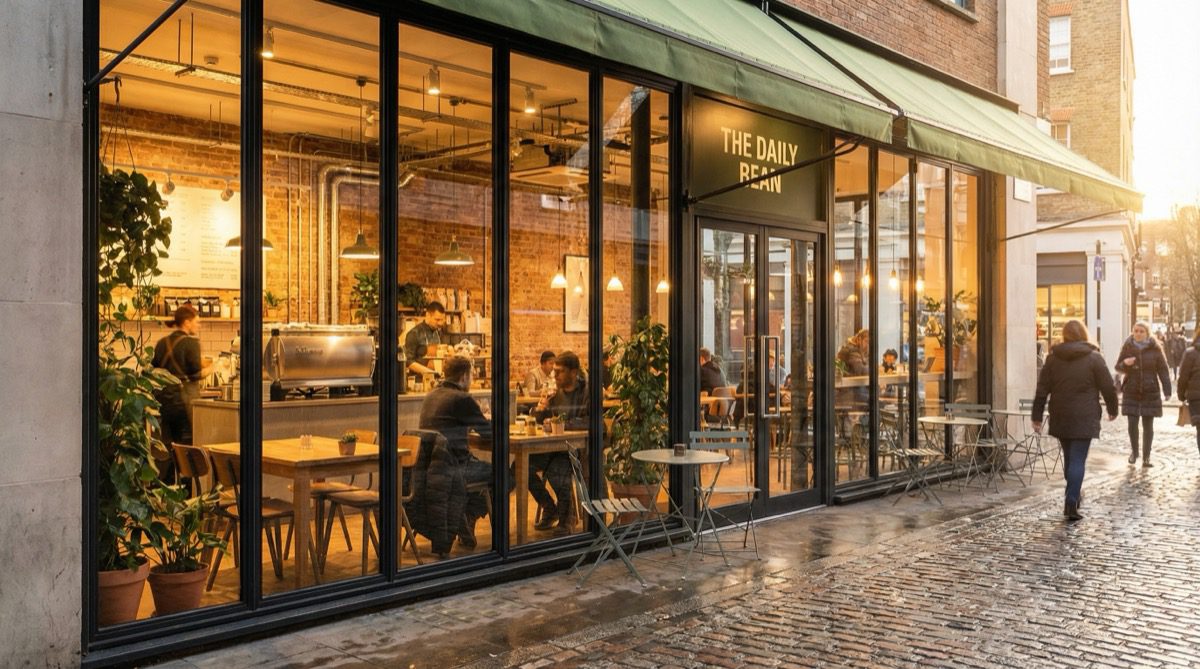
Coffee shops are among the most frontage-dependent businesses on the high street. Research consistently shows that shop front design directly affects footfall, and for cafes, the effect is amplified. Customers decide whether to enter based on what they can see from outside: the atmosphere, the activity, the quality of the space.
The most successful speciality coffee shops in London, Manchester, and Edinburgh all share one design trait: maximum visibility. Floor-to-ceiling glass, slim frames, unobstructed sightlines to the counter. They want you to see the coffee being made. That “theatre” — the barista pulling a shot, the latte art, the choreography of a busy service — creates curiosity, signals quality, and gives people a reason to stop.
In 2026, your shop front is also your most photographed asset. An eye-catching facade generates organic exposure on Instagram and TikTok that no paid campaign can replicate. Your frontage is not just architecture — it is content.
Glass Shop Fronts for Cafes
Full-height toughened glass panels are the foundation of modern cafe design. They flood the interior with natural light, make the space feel larger from both inside and outside, and — most importantly — let every passer-by see straight into your cafe.
For commercial coffee shop frontages, you need toughened safety glass as a minimum. Laminated glass offers additional security and holds together if struck, which matters when you have £10,000 to £20,000 of equipment sitting behind the front window.
Double-glazed units are worth the extra investment for a cafe. You are running espresso machines, ovens, and dishwashers that generate heat, and you are keeping the front door open half the day. Thermally efficient glazing keeps heating costs down in winter and prevents the interior from overheating in summer — a genuine operational saving, not just a comfort issue.
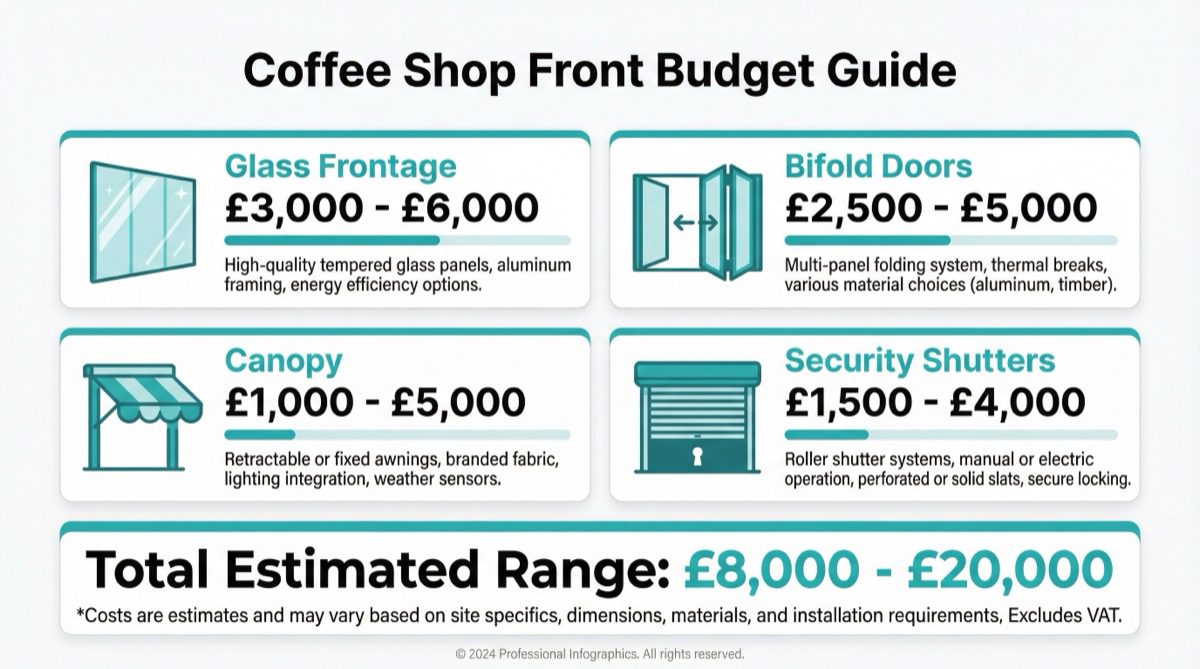
Budget £3,500 to £10,000 or more for a glass shop front installation, depending on the width of the frontage and the glazing specification.
Bifold Doors: Opening Up to the Street
If there is one trend that has defined coffee shop design over the past few years, it is the open-front concept. Bifold doors allow you to fold the entire frontage back on a warm day, turning your cafe into a seamless indoor-outdoor space without needing to invest in a separate terrace or outdoor seating structure.
The commercial benefits are straightforward. Al fresco seating increases your covers without increasing your floor space. Customers feel like they are sitting outside even when they are technically inside. And the open frontage creates an inviting, European cafe atmosphere that draws people in from the street. For cooler months when bifolds stay closed, consider pairing them with automatic doors to keep the entrance welcoming and accessible.
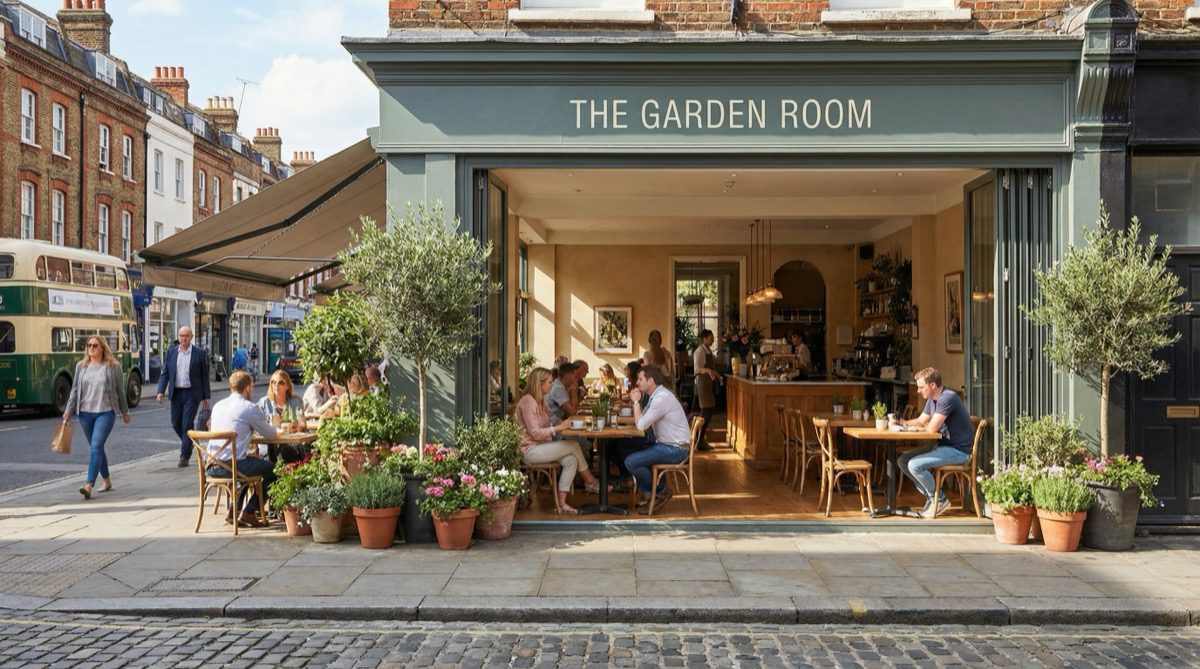
Aluminium bifold doors are the go-to for commercial cafe installations. They are durable, weather-resistant, and available with ultra-slim sightlines that maximise the glass area. Thermally broken frames keep energy costs down when the doors are closed. For colour, matte black and anthracite grey are dominating cafe fit-outs in 2025 and 2026, though custom powder-coating to match your brand colours is an option (add £200 to £800).
Budget £2,500 to £5,000 for a commercial bifold door installation, depending on the opening width and specification.
Canopies and Awnings for Outdoor Seating
A canopy or awning does three jobs at once: it extends your usable trading space, it protects outdoor seating from the British weather, and it acts as a branded marketing billboard visible from a distance.
For coffee shops, the choice usually comes down to:
- Fixed awnings: Sturdy and permanent, ideal for busy high street locations
- Retractable awnings: Flexible, allowing you to retract in good weather or during winter
- Drop-arm awnings: The classic European cafe look, good for sun protection
- Victorian or Dutch canopies: Heritage aesthetic, suited to conservation areas and period buildings
Modern canopies can include integrated LED lighting for evening ambience and wind sensors that automatically retract the awning in high winds. A branded canopy with your cafe name and colours visible from 50 metres down the street is marketing that works 24 hours a day, seven days a week.
Budget £1,000 to £5,000 depending on the size, type, and specification. Note that canopies extending over public pavements may need local authority permission.
Security for Your Coffee Shop
Coffee shops are a target. A decent espresso machine alone is worth several thousand pounds, and most cafes hold £10,000 to £20,000 or more of equipment behind their frontage. An all-glass shop front is beautiful during trading hours and an obvious vulnerability at night.
Roller shutters are the most common security solution. Internal shutters sit behind the glass and are invisible during the day. Vision shutters — perforated or lattice-style — allow passers-by and security patrols to see into the premises when the shop is closed, which acts as an additional deterrent because intruders cannot work unseen.
For cafes with high-value frontages, laminated and toughened glass provides a level of inherent security. It will not stop a determined break-in on its own, but it slows things down considerably and triggers alarms before entry is gained.
Budget £1,500 to £4,000 for roller shutter installation, depending on the width of the frontage and the shutter type.
Coffee Shop Front Design Trends 2025-2026
If you are designing a cafe frontage right now, these are the trends shaping the best new coffee shops across the UK:
- Open-front concepts — Bifold or sliding doors that completely open the frontage to the street
- Minimal frames — Ultra-slim aluminium profiles that maximise the glass area and minimise visual clutter
- Dark frames — Matte black and anthracite grey dominating new installations
- Seamless indoor-outdoor flow — Level thresholds and matching flooring that blur the line between interior and pavement
- Branded colour matching — Custom powder-coated frames in brand colours for a cohesive identity
- Integrated signage — Fascia signage built into the shop front system rather than bolted on as an afterthought
- Energy-efficient glazing — Double and triple glazing for temperature control and reduced running costs
- Instagrammable facades — Striking exterior designs that customers photograph and share on social media
The common thread is visibility. The most successful cafe frontages put as little as possible between the customer on the pavement and the coffee being made inside. For inspiration on what works, take a look at our guide to unique shop front design ideas and our advice on how shop front lighting can transform your cafe’s kerb appeal after dark.
Licences, Insurance, and Legal Costs
The regulatory side is not as daunting as it sounds. You must register as a food business with your local council at least 28 days before opening (free). A premises licence is only needed if selling alcohol or serving food after 11pm. A pavement licence for outdoor seating typically costs £100 to £500 per year. If you play background music, PRS and PPL licences run around £200 to £350 per year combined.
On insurance, you will need public liability (from around £100/year), employer’s liability if hiring staff (a legal requirement), and contents cover for your equipment. Budget £1,000 to £3,000 for licences and insurance combined in your first year.
Marketing and Branding Costs
Many new cafe owners overspend on digital marketing and underspend on the physical branding that actually drives walk-in trade. Your shop front IS your most effective marketing channel. Budget £500 to £3,000 for brand identity (logo, menus, packaging), £500 to £2,000 for a website and social media setup, and £500 to £2,000 for your opening launch. Set up a Google Business Profile from day one — it is free and invaluable for local discovery.
Total marketing budget: £2,000 to £10,000. But remember — a well-designed, Instagrammable frontage generates more organic marketing than any paid campaign.
Ongoing Monthly Costs
Once you are open, here is what your monthly outgoings look like. These figures assume a small to mid-sized independent cafe.
| Category | Monthly Range |
|---|---|
| Rent | £1,000 – £5,000+ |
| Staff wages | 30-35% of revenue |
| Supplies and stock (beans, milk, food) | 25-30% of revenue |
| Utilities (gas, electric, water) | £1,000 – £1,500 |
| Insurance | £80 – £250 |
| Marketing | £100 – £500 |
Staff wages and supplies together account for 55-65% of revenue. Margins are tight, and volume matters.
Is a Coffee Shop Profitable?
The honest answer: yes, but not as profitable as most people assume when they start.
The average UK cafe generates approximately £788,400 in annual revenue according to IBISWorld data. Independent coffee shops typically sit between £250,000 and £500,000, with high-performing independents in prime locations reaching £750,000 or more. Gross profit margins on coffee itself are strong at 65-75% — a flat white that costs 40-50p in ingredients sells for £3.50 to £4.50. But rent, wages, utilities, and waste eat into that margin fast.
After all costs, established independents typically achieve net profit margins of 10-20%, with average annual profit around £56,763. Most new coffee shops take 12 to 18 months to break even. Your shop front plays a direct role in how quickly you reach that point — a frontage that draws walk-in trade from day one shortens the runway to profitability.
Planning Permission for Your Coffee Shop
Since September 2020, cafes and retail shops both fall under Use Class E (Commercial, Business and Service). If you are taking over a premises already used for another Class E purpose — a former retail unit or estate agent, for example — you may not need planning permission for the change of use itself.
You will still likely need permission for a new shop front installation, external signage (both illuminated and non-illuminated may need advertisement consent), and any structural alterations such as widening an opening for bifold doors. Properties in conservation areas face stricter requirements, and listed buildings always need Listed Building Consent.
A standard planning application costs £462. Understanding the total costs of opening a shop in the UK — including planning and regulatory fees — will help you avoid surprises once the lease is signed.
Your Complete Coffee Shop Budget Checklist
Here is the full picture, bringing all the costs together for a typical small to mid-sized independent coffee shop in 2026.
| Cost Category | Budget | Mid-Range | Premium |
|---|---|---|---|
| Lease deposit (3-6 months) | £3,000 | £12,000 | £30,000+ |
| Legal fees | £500 | £1,500 | £3,000 |
| Interior fit-out | £15,000 | £40,000 | £80,000+ |
| Shop front | £2,500 | £6,000 | £15,000+ |
| Equipment | £9,500 | £23,500 | £50,000+ |
| Initial stock | £1,500 | £3,000 | £5,000 |
| Licences and insurance | £1,000 | £1,500 | £3,000 |
| Marketing and branding | £2,000 | £5,000 | £10,000 |
| Working capital (3 months) | £5,000 | £15,000 | £30,000 |
| Total | £40,000 | £107,500 | £226,000+ |
Working capital is one of the most commonly underestimated items on this list. You need enough cash to cover three months of operating costs while you build up trade. Running out of cash in month four is how otherwise good coffee shops fail.
Getting Your Coffee Shop Front Right
You can choose better beans, train better baristas, and refine your menu. But you cannot control how many people walk down your street. What you can control is how many of them decide to walk through your door — and that comes down to your shop front.
If you are planning a new coffee shop or redesigning an existing frontage, Huxley & Co design and install commercial shop fronts, aluminium shop fronts, bifold doors, canopies, and security shutters across the UK. We hold CHAS and Constructionline accreditations and have over 20 years of experience fitting out commercial premises — including cafes, restaurants, and retail units.
Call 020 7112 4849 or get in touch for a free quote on your coffee shop front.